






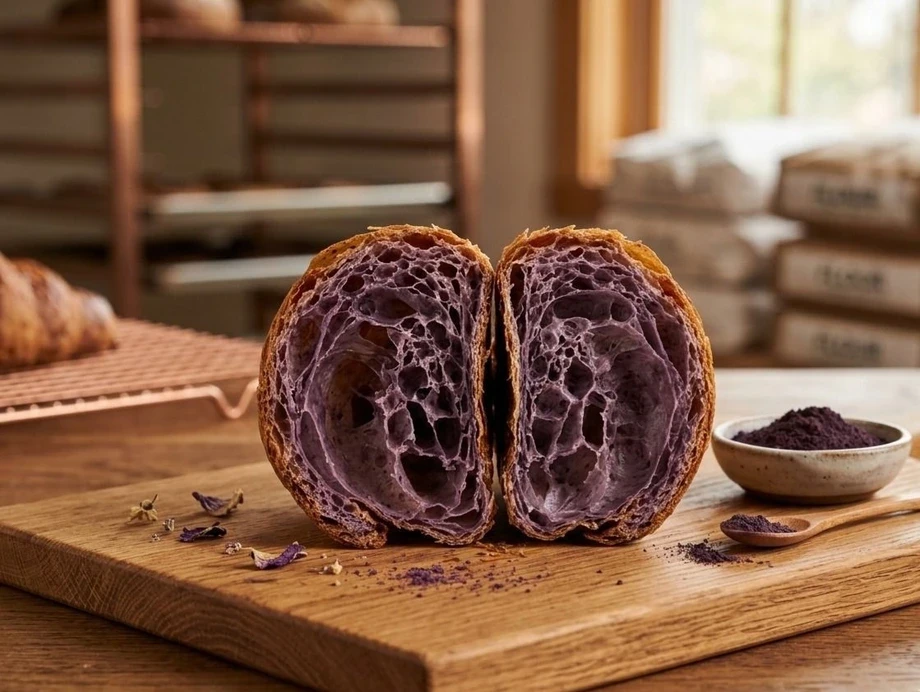
Reducing food waste and giving new life to food industry by-products by turning them into high-value ingredients. This is the mission of NoWaste, a company founded in May 2025 in Monselice by Filippo Ostellari. One of the main products in its catalogue is wild bilberry skin powder, a functional, colour-enhancing and clean label ingredient obtained by recovering by-products from fruit juice processing.
We interviewed Filippo Ostellari, founder of NoWaste, to learn how the project began, what benefits upcycling offers food companies and what challenges lie ahead for the supply chain.
Filippo, how did the idea for NoWaste come about, and what has your journey in sustainability been like?
I have always believed that people should do their part to leave behind a better world. My entrepreneurial journey in sustainability began in 2020, when I established a company collecting used cooking oil, which I later sold in 2024. I then became interested in finding new uses for spent coffee grounds and discovered a project in Denmark that turned coffee into powder for the food industry.
That experience made me realise that, beyond coffee, there were many other raw materials and food industry by-products with enormous untapped potential. That is how NoWaste was founded in May 2025.
How is NoWaste structured, and how does your business model work?
We are based in Monselice, in the province of Padua. There are three of us in the team: I manage the industrial channel, my brother handles purchasing, and our partner Matteo manages the finances. We also work with a network of around six sales agents for the HoReCa channel.
I would like to clarify that we are not direct manufacturers: we work closely with partner companies based in Reggio Emilia and Cuneo, which handle the drying and subsequent micronisation of the raw materials. We manage ingredient selection, value enhancement and market distribution.
One of your most successful ingredients is blueberry flour/powder. Where does the raw material come from, and how is it processed?
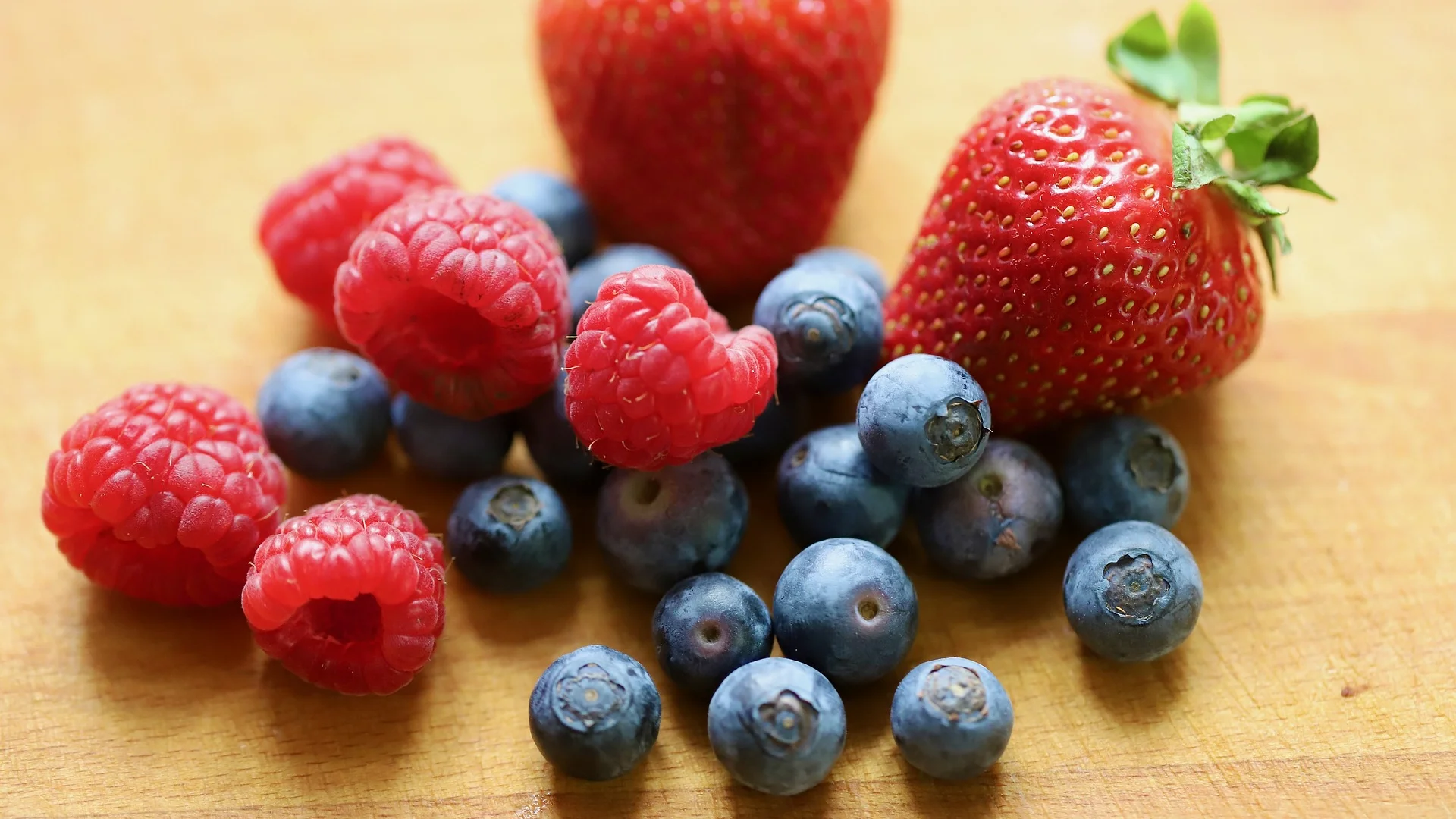
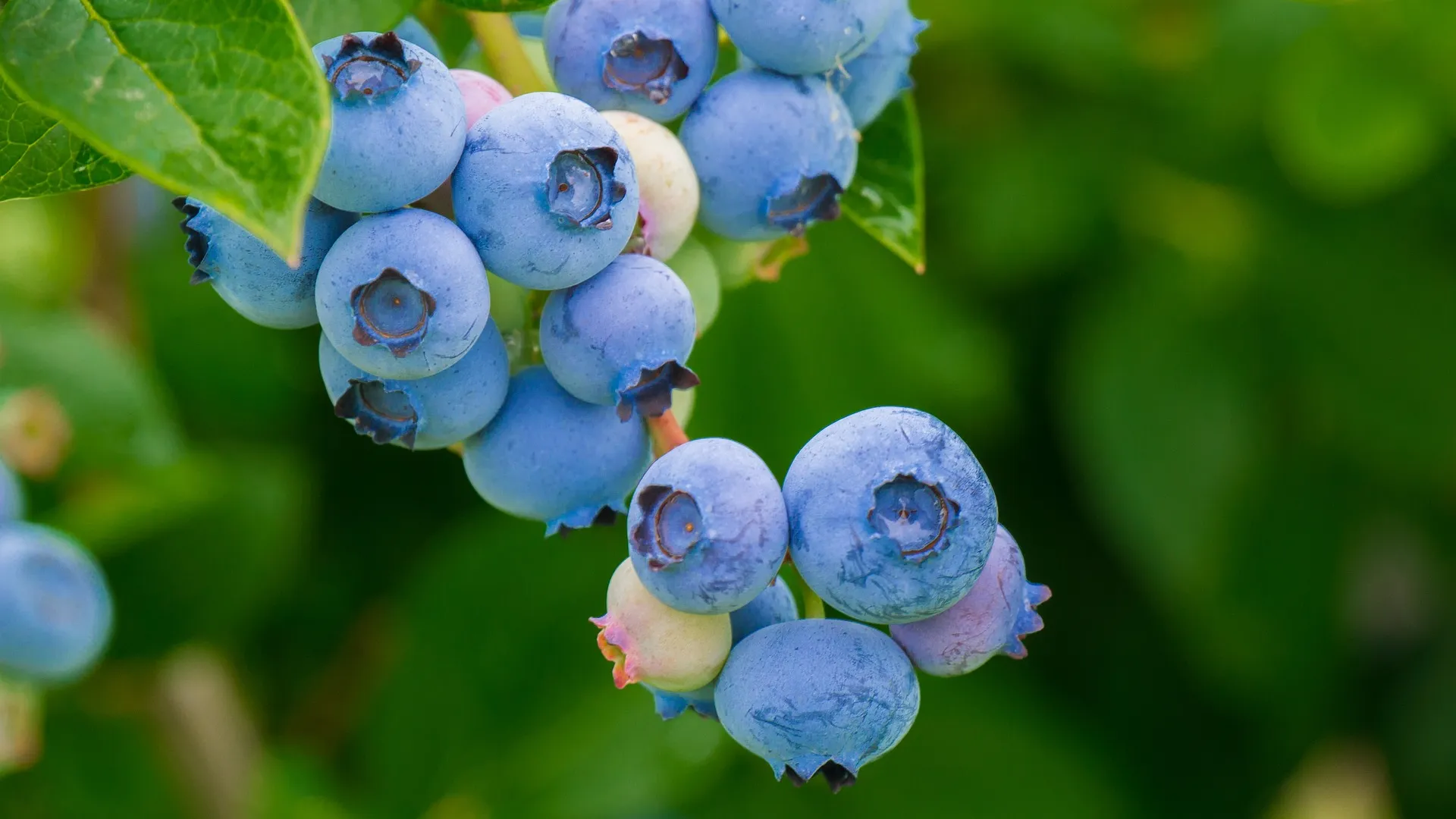
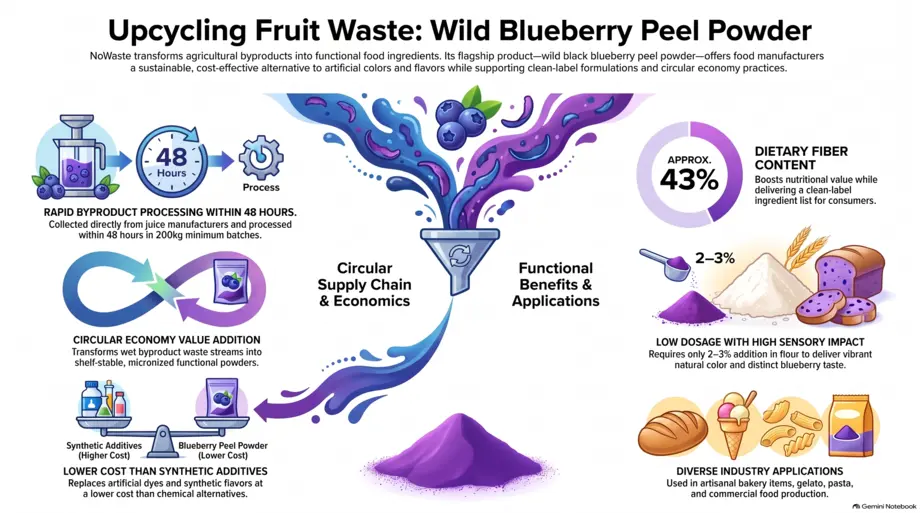
Wild bilberry skin powder is by far our flagship product and the most sought-after. The raw material comes mainly from industrial fruit juice processing. The ingredient is derived from cultivated blueberries, which are essential to ensure minimum processing batches of around 200 kg. We offer both a certified organic version, mainly intended for HoReCa, and a conventional version for industrial use.
Since these pressing by-products have a high water content and are very moist, speed is a crucial logistical consideration: the raw material must be processed and dried within approximately 48 hours of juice production.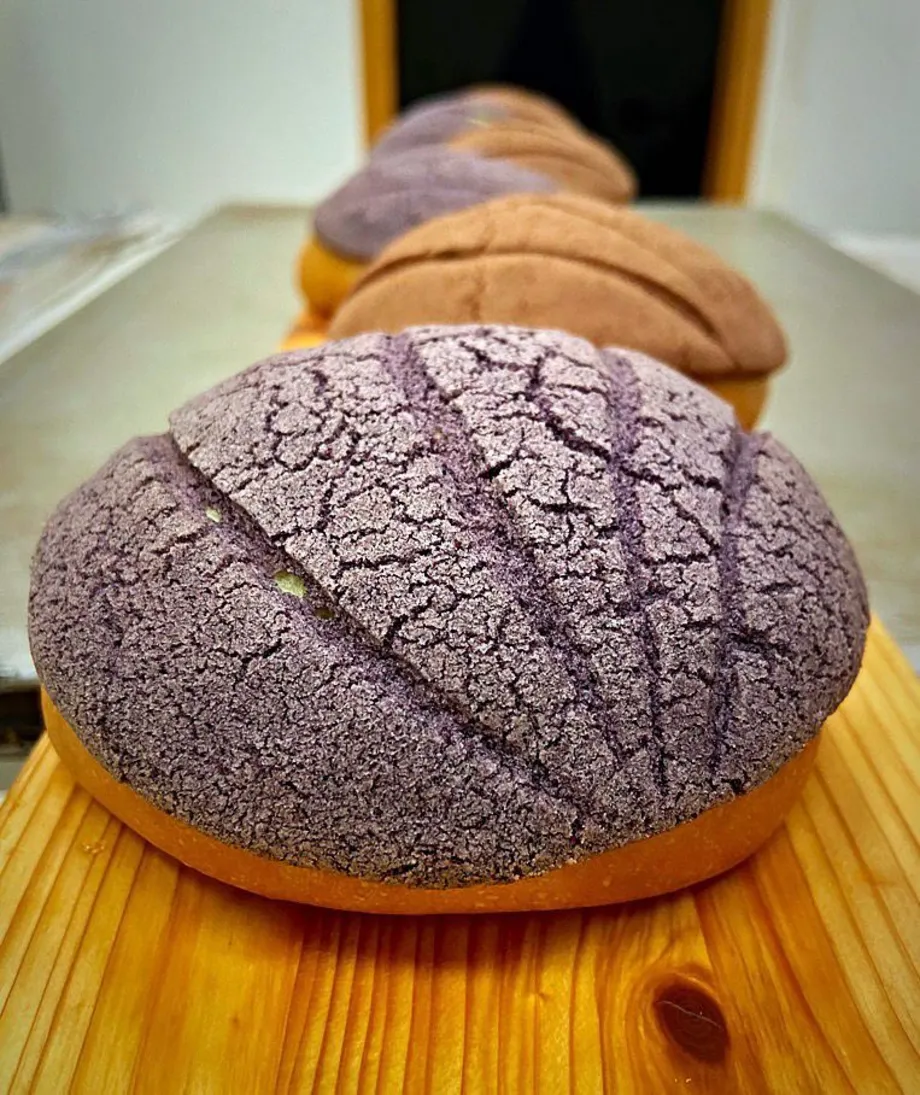
What properties does this ingredient bring to finished products, and which sectors use it?
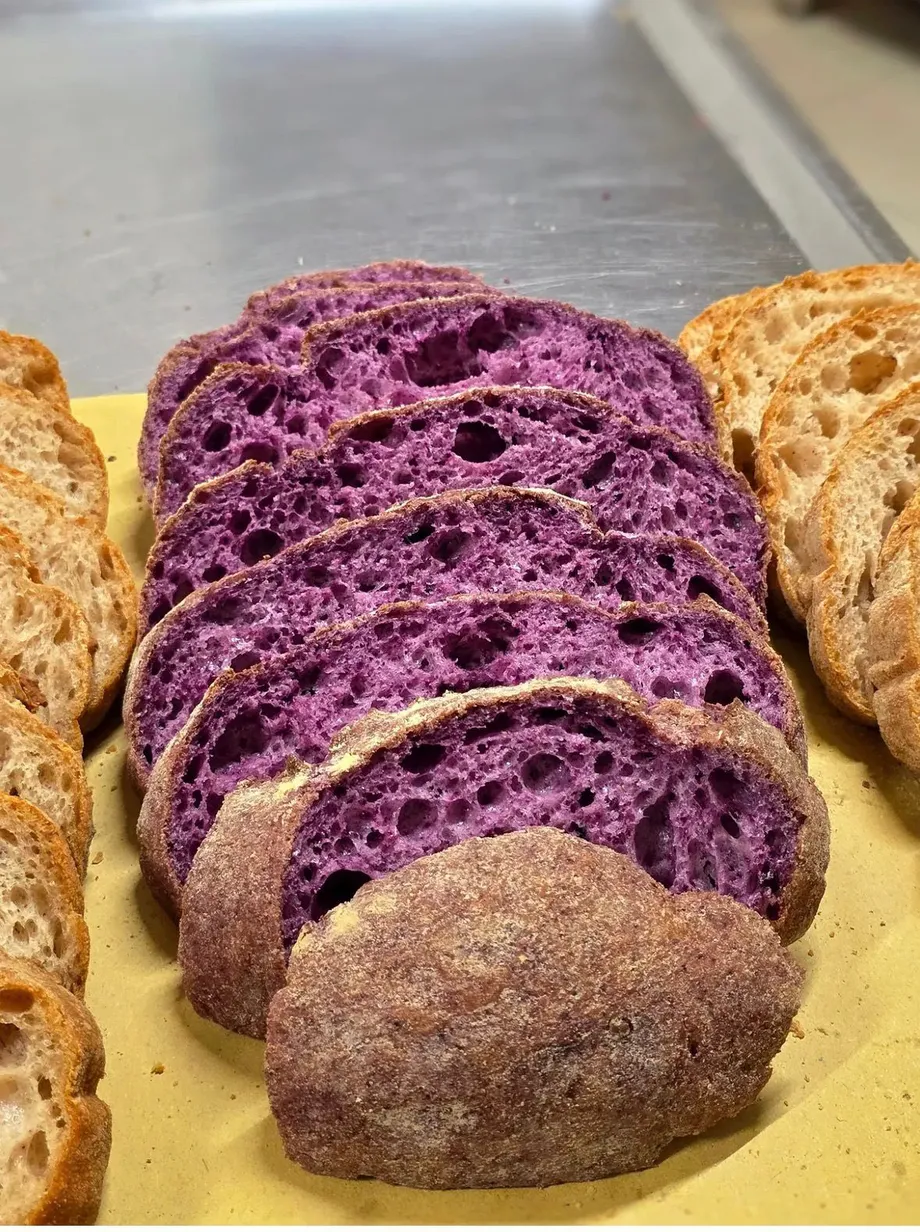
It offers two types of value: flavour and functionality. It contains around 43% fibre and delivers exceptional colour. It is used in small proportions, usually between 2% and 3% of the flour weight, mainly in the bakery sector for baked goods and leavened products. During baking, the outside of the product turns slightly brown, but the inside retains a truly spectacular colour and blueberry flavour.
Beyond bakery applications, we are seeing strong interest from pizzerias and bakeries, as well as pasta producers and even ice cream makers.
How does the upcycled ingredient compare with traditional synthetic colourings and flavourings?
The benefits for the industry are clear. First, it supports a clean label by replacing synthetic additives and flavourings.
Second, there is a cost advantage: our powder costs less than many synthetic colourings and flavourings.
The only real challenge concerns the food industry's timelines: reformulating a recipe requires coordination between several company departments, and many large companies have spent more than 12 months testing before permanently incorporating our ingredients into their production lines.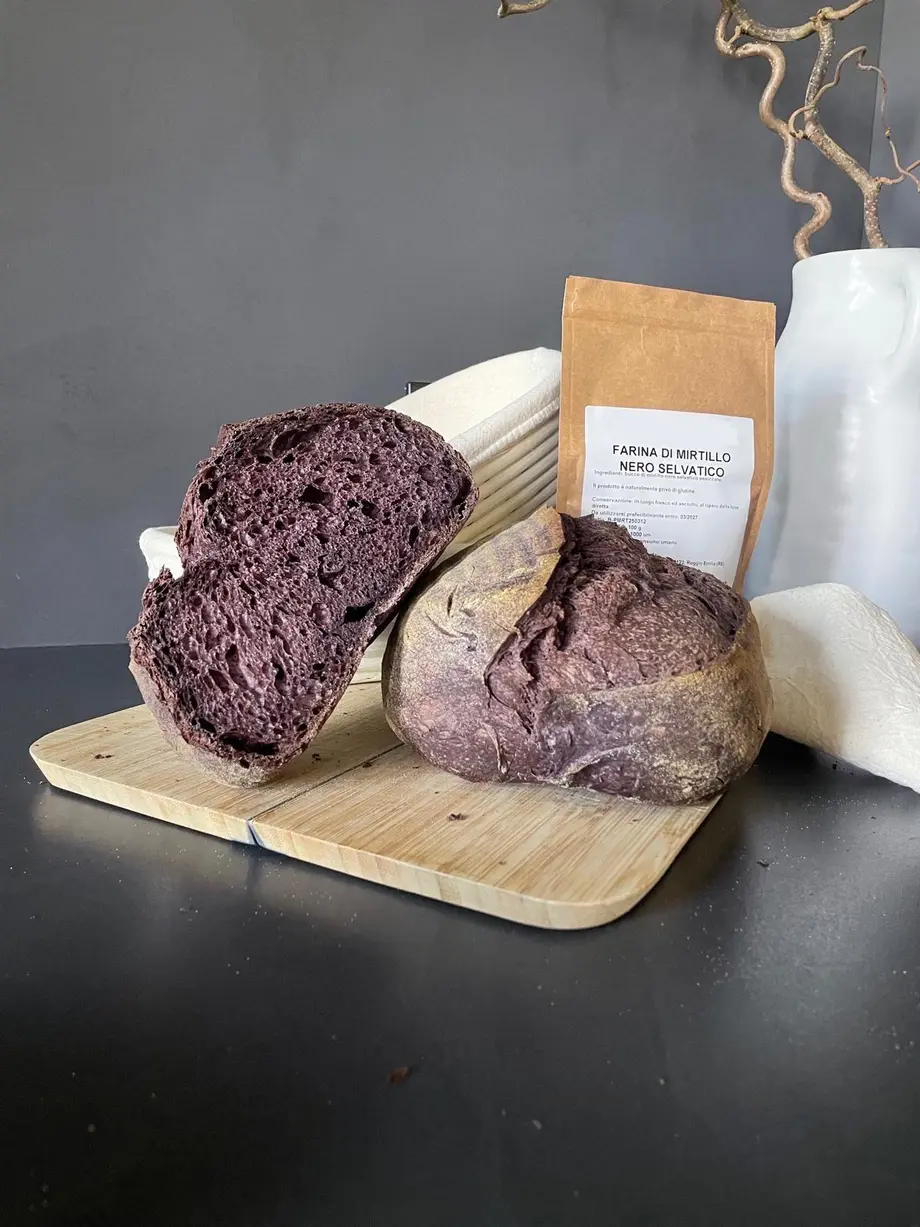
From a regulatory perspective, can the value of upcycling be communicated directly on the label?
This currently represents something of a bottleneck. In Europe and Italy, there is still no recognised official body or claim that certifies an ingredient's circular economy credentials on the label. A certification exists in the United States, but it requires the finished product to contain at least 10% upcycled ingredients, a threshold that is impractical for ingredients such as ours, which are used at levels between 2% and 10%.
Many customers use the powder to achieve a cleaner label by replacing colourings. To fully communicate the sustainability of the process, we are working with our partners to identify a claim or certification that would allow companies to explain the product's circularity to consumers.
What are NoWaste's future plans for expanding the range of by-products it adds value to?
Alongside the ingredients already in our catalogue, derived from juices, plant-based drinks and grape pomace, we are launching a new project to work directly with growers. We want to add value to surplus produce and by-products at farm level in other supply chains, such as strawberries or peaches that fall outside size specifications or are not intended for the fresh market.
The goal is to establish lasting relationships with growers to turn what is currently waste into new resources for the food industry.
Italian Berry - All rights reserved