






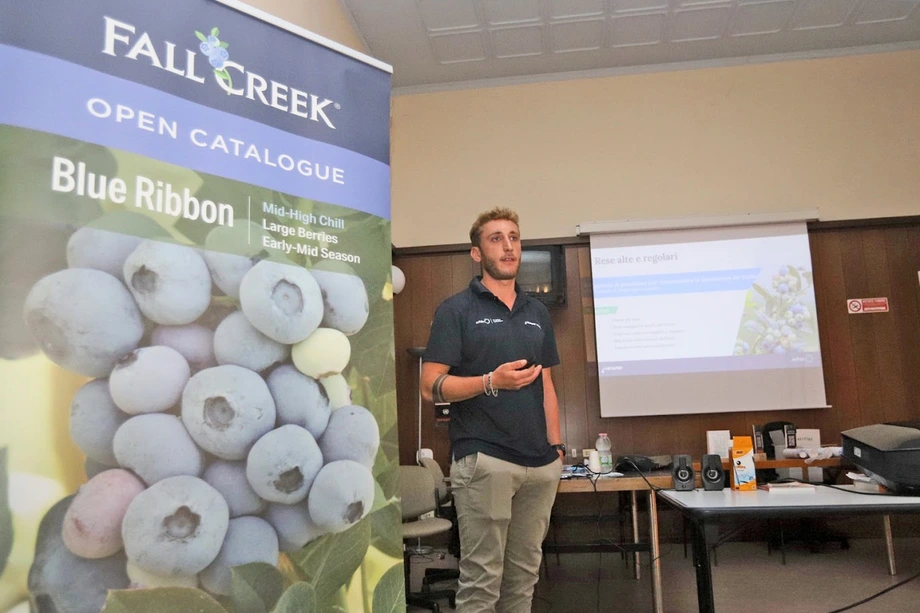
Summary of Andrea Cazzaniga's (Netafim) presentation on the S.O.PH.I.A. system, delivered at the Fall Creek Connect event held in Sondrio.
Crop protection management in berries is facing an increasingly complex operating environment: late frosts, narrow treatment windows, rising labour costs and growing attention to water use and spray drift.
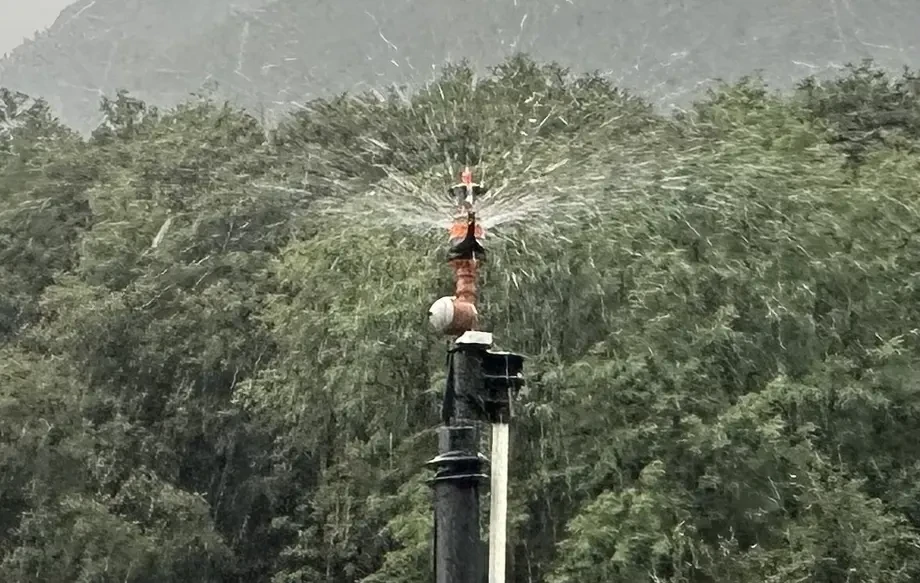
At the Fall Creek Connect event in Sondrio, Andrea Cazzaniga of Netafim presented S.O.PH.I.A., a fixed over-canopy system designed to combine targeted treatments and row-specific frost protection.
The solution forms part of the broader evolution of crop protection techniques in specialised orchards, where the goal is not only to intervene effectively, but also to use fewer resources and exert a more controlled impact on the growing environment.
For a high-value crop such as the blueberry, the possibility of combining application precision, water savings and fewer machinery passes through the field is attracting growing technical interest.
Key takeaways
1. One fixed system for two operational functions.
S.O.PH.I.A. combines over-canopy delivery of crop protection treatments with a degree of row-specific frost protection. According to the data presented, water savings compared with traditional continuous-sprinkling systems can range from 40% to 60%.
2. Application is concentrated on the productive row.
Targeted distribution directs the treatment onto the crop, reducing its impact on the inter-row space and the risk of lateral drift. This is particularly relevant for delicate crops such as blueberries and for farms located near sensitive or residential areas.
3. Pulsar technology regulates pulsed delivery.
The system uses an accumulation chamber called Pulsar, which releases water or crop protection mixture in pressure pulses. The aim is to avoid continuous flow, limit run-off and promote more uniform distribution along the row.
4. Frost protection depends on the system configuration.
In the standard configuration, the system is indicated for frost protection down to -2°C. When configured with high-flow drippers, the stated level of protection can reach -5/-6°C.
5. Fewer field passes reduce compaction and machinery use.
Management from the headland reduces the need to drive a tractor between the rows, potentially benefiting wet-soil compaction, fuel consumption, emissions and operator safety.
What emerged from the presentation
The presentation focused on an increasingly recurring theme in specialised fruit growing: turning infrastructure already present in the field into tools capable of performing multiple functions.
In the case of S.O.PH.I.A., the idea is to apply the principles of micro-irrigation and targeted distribution to manage not only water, but also over-canopy treatments and a certain degree of frost protection.
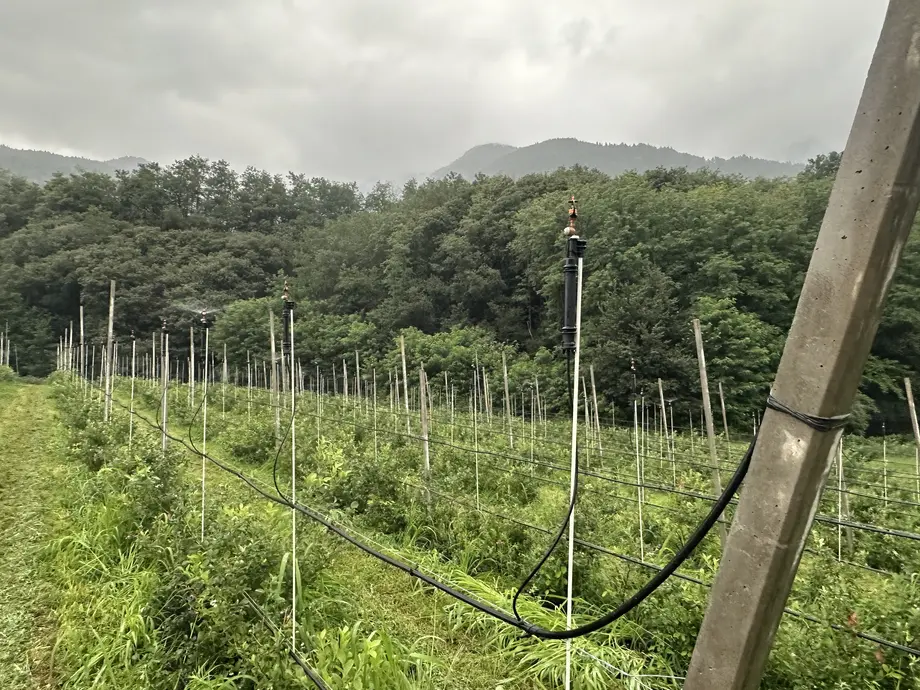
Structurally, the system consists of a pipe running along the row, connected via pressure-compensating drippers and dedicated microtubes to emitters installed above the canopy and secured to the support structure.
The solution is therefore closely linked to system design: it requires posts, adequate pressure, a well-managed canopy and a structure capable of supporting the emitters in an effective position over the productive row.
For blueberries, a crop in which uniformity, timeliness and stress reduction are crucial, the system is proposed as a possible alternative or complement to more traditional treatment methods.
Crop protection becomes part of system design
The central issue is not only the technology itself, but how it is integrated into the orchard.
Fixed systems of this type require crop protection to be considered from the design stage, together with irrigation, posts and trellising, canopy management and row accessibility.
An over-canopy network for targeted treatments
S.O.PH.I.A. is based on over-canopy distribution from fixed points.
The liquid is conveyed along the row and released above the vegetation through emitters installed on the row structure.
This configuration concentrates the intervention on the productive part of the system, reducing application in non-target areas.
Targeted treatment is one of the system's most important features, especially in settings where drift is a technical, environmental or social concern.
Compared with an air-blast sprayer pass, the solution changes the logic of the operation: rather than machinery moving along the row, the system itself becomes the distribution infrastructure.
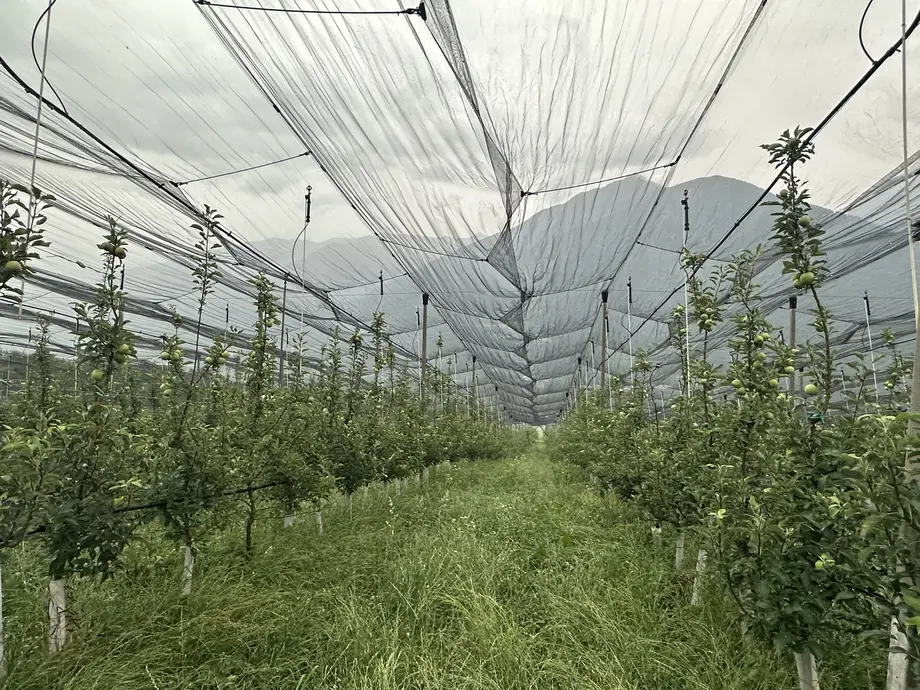
Pulsar: non-continuous delivery
One of the technical elements described in the presentation was Pulsar technology.
Rather than being delivered continuously, the liquid accumulates in a chamber until the pressure required for release is reached.
Delivery therefore takes place in pulses.
This mechanism was presented as a solution for reducing water consumption and limiting the risk of the product running off the vegetation.
Pulsed operation is also relevant during system flushing.
After the mixture has been injected, clean water pushes the residual product through the pipes, helping to maintain more uniform distribution from the beginning to the end of the row.
According to the presentation, droplets can also bounce off the leaves and help wet the inside of the canopy, albeit within the typical limitations of a system that does not use the air penetration of an air-blast sprayer.
| Technical aspect | Function | Operational implication |
|---|---|---|
| Over-canopy distribution | Targeted application on the row. | Reduced dispersion towards the inter-row space and non-target areas. |
| Pulsar chamber | Accumulation and release in pressure pulses. | Less continuous flow and better run-off management. |
| Final flushing | Pushes residual product through the pipes. | Greater uniformity between the beginning and end of the row. |
| Frost-protection function | Targeted protection of the crop. | Stated water savings of 40-60% compared with continuous sprinkling. |
| Management from the headland | Treatment without the tractor entering the row. | Less compaction and reduced operator exposure. |
Two-stage treatment
The operating sequence described involves two stages: injection of the mixture followed by flushing with clean water.
The stated overall duration is approximately 15 minutes.
In the first stage, the mixture is introduced into the line and distributed through the over-canopy emitters.
In the second stage, clean water flushes the pipes and pushes the residual product to the end of the row.
This configuration addresses a typical challenge of linear distribution systems: ensuring that treatment is as uniform as possible along the entire row.
From a management perspective, operating from the headland reduces the need to enter the field with machinery, which is particularly useful when the ground is wet or treatment windows are narrow.
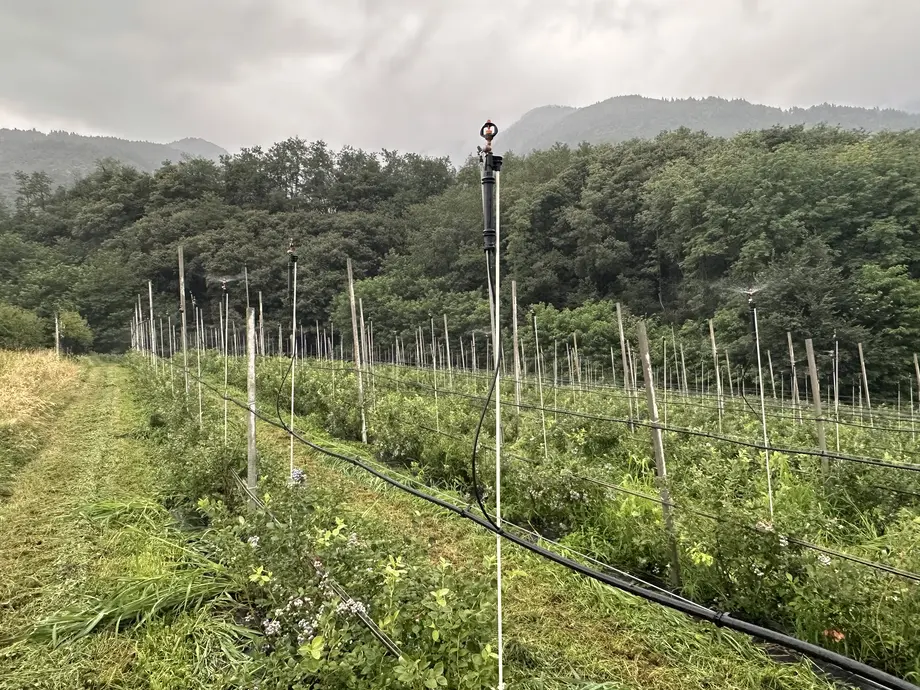
Conditions required for operation
Several technical requirements were also highlighted during the presentation.
The system requires a minimum pressure of 2.8 bar to activate delivery correctly and maintain uniformity along the line.
A support structure on which to install the over-canopy emitters is also required.
Vegetation management is another factor to consider.
S.O.PH.I.A. works by gravity and does not have the penetration force typical of a conventional air-blast sprayer.
It is therefore better suited to systems with well-managed canopies that are not excessively large and are consistent with carefully controlled technical row management.
Drift and sensitive areas
Drift reduction is one of the most significant aspects of the technology presented.
Application on the row helps limit dispersion of the product beyond the target area.
This is particularly important for farms located near homes, roads, sensitive sites or residential areas.
In these settings, treatment management concerns not only crop protection efficacy, but also coexistence with the surrounding area and external perceptions of farming activities.
For crops such as blueberries, which are often grown in specialised systems and have a high unit value, more controlled application can help reduce operational risk.
Frost protection: two levels of intervention
In addition to treatments, S.O.PH.I.A. was also presented as a system for targeted frost protection.
In its standard configuration, the stated protection reaches down to -2°C.
According to the presentation, tests in a climate chamber were used to verify the system's performance down to this threshold.
The system can also be configured with high-flow drippers: in this version, protection can reach down to -5/-6°C.
This figure should be considered alongside the stated water savings of between 40% and 60% compared with continuous-sprinkling systems.
Frost protection: from full coverage to targeted protection
The system operates according to a different principle from generalised continuous sprinkling.
The intervention is concentrated on the productive row, with the aim of protecting the crop while reducing the volume of water required.
The issue of field passes
Another theme that emerged was the reduction in tractor passes between the rows.
When the ground is wet, machinery entering the field can encourage compaction, reduce porosity and impair root function.
The ability to manage treatments from the headland limits this problem, especially when rapid intervention is needed but soil conditions are unfavourable.
Fewer passes also mean lower fuel consumption and lower CO2 emissions.
Operator safety is another consideration, as exposure may be lower than with a traditional application using machinery and an air-blast sprayer.
A technology to be assessed within the farm system
The value of a solution such as S.O.PH.I.A. depends on how it is integrated into the farm system.
It is not a stand-alone device, but an infrastructure that interacts with irrigation, posts and trellising, canopy architecture, treatment management and frost-protection strategies.
Its adoption therefore requires an overall technical assessment of the system.
Factors to consider include not only water savings or drift reduction, but also compatibility with the existing structure, available pressure, canopy shape, crop type and crop protection objectives.
In blueberries, where late frosts and treatment precision can have a significant impact on economic results, systems of this type point towards a new direction: making crop protection more integrated, more targeted and less dependent on machinery passes.
In summary
The presentation of Netafim's S.O.PH.I.A. system in Sondrio drew attention to a possible evolution in crop protection management for blueberries and berries.
The combination of over-canopy treatments, targeted frost protection, pulsed delivery, drift reduction and water savings addresses several challenges facing modern fruit growing.
However, the system requires specific technical conditions and must be assessed as part of the overall system design.
Against a backdrop of rising costs, greater climate pressure and increased attention to environmental impact, the direction is clear: crop protection is becoming increasingly infrastructure-based, targeted and integrated with the orchard's agronomic management.
By the Italian Berry Editorial Team
Original content produced and verified by the editorial team.
Italian Berry - All rights reserved