





The blueberry sector is undergoing a rapid transformation, driven by pressure on labour costs, advances in genetics and changes in global production. To explore these trends, we interviewed Nikos Genalis, European Operations Director at United Exports, known for its OZblu brand and breeding programme.
In this exclusive interview, Genalis provides a detailed overview of the group’s varietal strategies, the challenges facing Southern Europe and the outlook for international markets.
 Nikos Genalis (second from right) was a featured participant in the roundtable on genetics and harvesting efficiency at the Morocco Berry Conference 2026
Mechanical harvesting and labour costs: what are the priorities of the OZblu breeding programme?
Our selection and breeding efforts primarily focus on mechanical harvesting for developed countries with high labour costs and limited labour availability, such as Australia, Spain, Portugal and North America. We believe we are around 15–20 years ahead of the competition in this area.
We currently harvest 150 hectares in Australia mechanically on a commercial scale, with plans to reach 500 hectares over the coming years. This approach significantly reduces costs in a high-wage environment where 80% of the workforce consists of working holiday visa holders, commonly known as European backpackers.
What specific fruit characteristics are you looking for?
The main traits we focus on are:
- Large fruit size: the breeding programme aims to achieve fruit measuring 20–22 mm and above for at least 50% of each variety’s production.
- Extended shelf life: we maintain a selection criterion of at least 35 days of commercial shelf life.
- Thicker skin: an essential characteristic for enabling mechanical harvesting, delivering greater crunch and ensuring the postharvest durability needed to ship fruit from the Southern Hemisphere, particularly Peru and South Africa, to markets in North America, the United Kingdom and Europe.
- Low-chill and zero-chill genetics: we are pursuing only programmes with low or no chilling requirements (Southern Highbush), with no plans to develop mid- or high-chill varieties, as we believe the future lies in premium proprietary low-chill genetics.
How is the global production map evolving across South America, Africa and the Mediterranean basin?
Our development remains extremely strong in Peru, where we expect to plant between 5,000 and 5,500 hectares of the Magica variety by the end of 2027. In South Africa, development is regaining momentum after several years of stagnation.
We see major changes taking place in the Mediterranean basin and the Northern Hemisphere:
- Egypt: we are conducting trials and are very excited about the country’s future potential as a producer and exporter to the United Kingdom and Europe.
- Morocco: the programme is fully operational and growing year on year; we are investing in a local team to support growers directly.
- Northern Hemisphere outlook: we expect Morocco and Egypt to become the dominant players, potentially accounting for 70–80% of Northern Hemisphere production within the next 10 years.
What role do you foresee for Italy and other Southern European countries, such as Spain and Portugal?
Southern European countries are gradually becoming less competitive in high-volume production because of high labour costs and strong competitive pressure from Morocco and, in the future, Egypt. The situation in Spain and Portugal has become very challenging.
Our view is that these regions will increasingly focus on “back-to-back” agreements or “local-for-local” models, meaning local production for the domestic market, where consumers are willing to pay a premium for home-grown produce during its domestic season. We also have a small production base in Italy, intended primarily for arrangements of this kind: blueberries grown in Italy to be sold in Italy.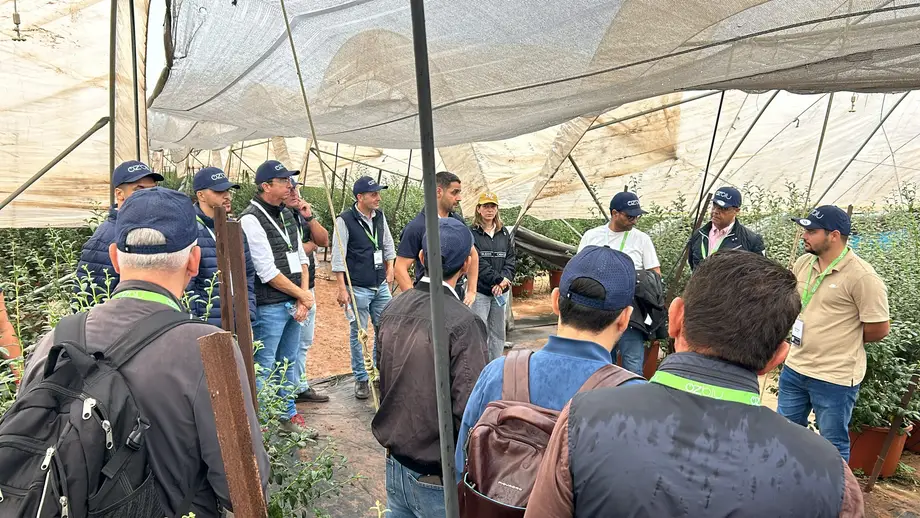
Turning to Asia, what are your plans for huge markets such as China and India?
In China, we are already a significant exporter of Peruvian fruit: our Magica variety is considered a top-tier product in the market and commands a 30% price premium over Sekoya Pop. Chinese customers are pushing strongly for us to start producing locally. We remain cautious because of intellectual property protection concerns, but we know that, at some point, we will need to identify reliable partners and begin production in China.
As for India, with a population of 1.4 billion people and a rapidly expanding middle class, blueberry demand is set to increase substantially. Entering the market is inevitable, and in the meantime we are working to establish a phytosanitary protocol allowing blueberry exports from South Africa to India so that we can begin developing the market.
How are consumption and European consumer preferences changing?
Consumption continues to grow steadily. In more mature markets, such as the United Kingdom and Scandinavia, we are seeing double-digit year-on-year growth. Consumption is also increasing in Eastern European markets, such as Hungary, the Czech Republic, Slovakia, Slovenia and Poland, where people are eating blueberries for more months of the year.
Consumers increasingly understand the difference between high-quality premium varieties and freely available varieties, with preferences shifting clearly towards premium ranges. Blueberries are also perceived as a global, international product: unlike strawberries, which have a strong association with local production and seasonality, consumers do not necessarily associate blueberries with a particular season or geographical origin, provided the quality is high.
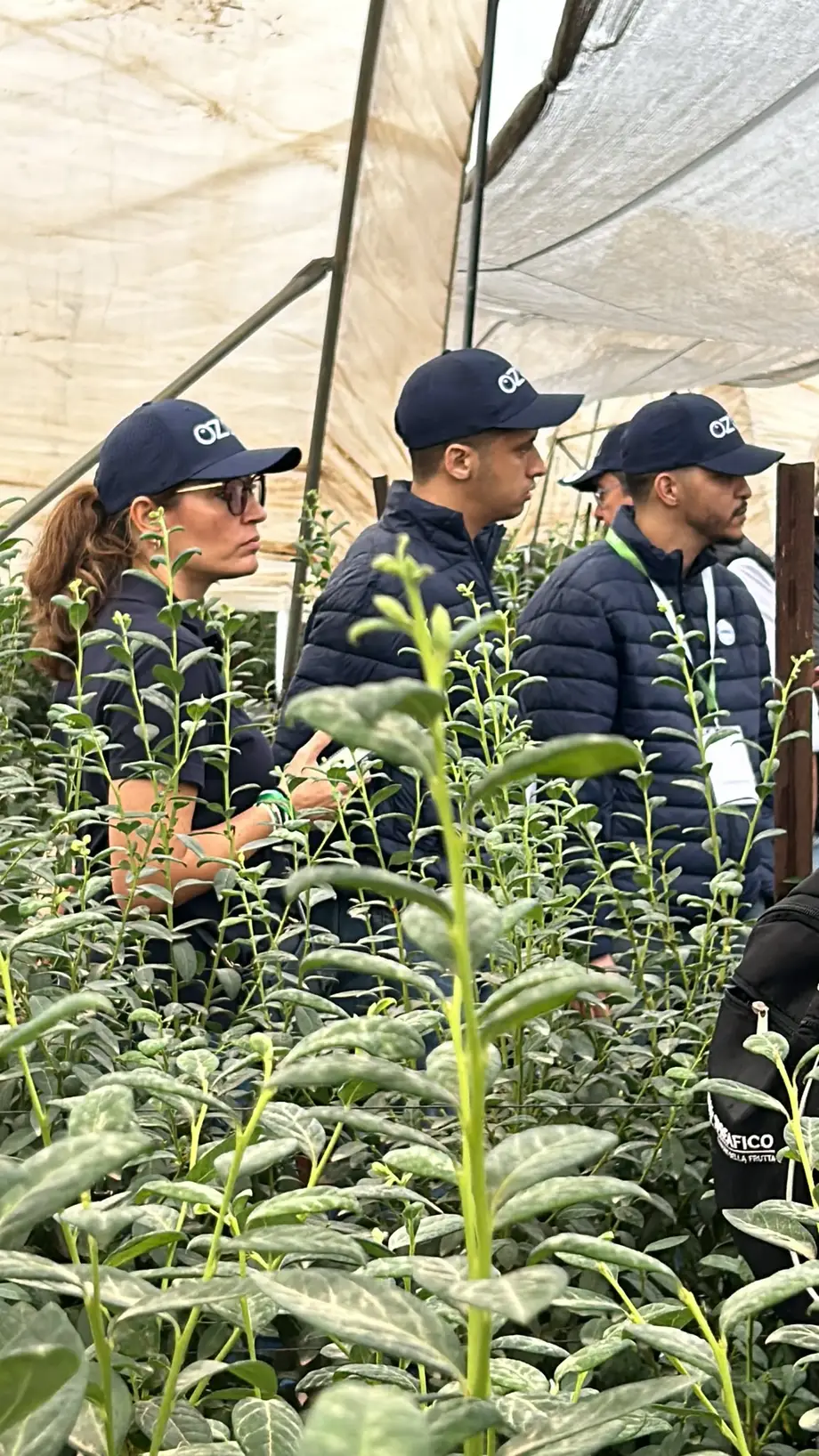
 The United Exports team at the Morocco Berry Conference 2026
Italian Berry - All rights reserved