









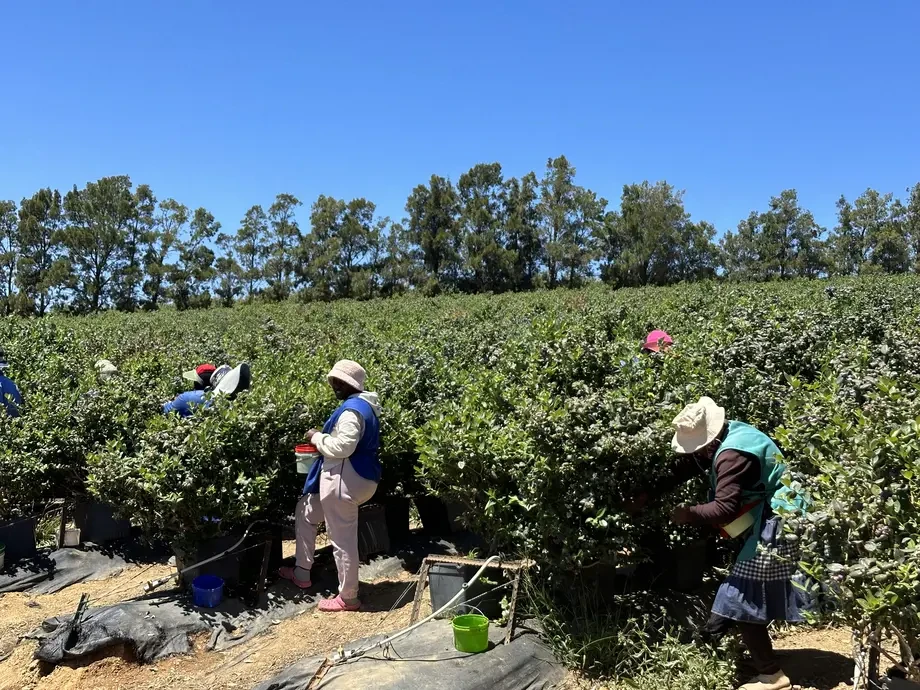
Favourable weather conditions, higher productivity and new varieties are supporting the growth of South Africa’s blueberry industry. The sector remains strongly export-oriented despite rising costs and logistical challenges.
South Africa is playing an increasingly important role in the global blueberry market. Thanks to favourable growing conditions, high-performing varieties and a strategy strongly focused on exports, the country’s production rose to approximately 38,900 tonnes in 2025/26.
The figure comes from the latest GAIN report published by the United States Department of Agriculture (USDA), which also highlights an increase in domestic consumption. Nevertheless, exports continue to represent the main commercial outlet for the South African industry.
Exports increase by 6.7%
In 2024/25, South Africa exported 22,605 tonnes of blueberries, an increase of 6.7% compared with the previous season.
The recent opening of the South African market to blueberries from the United States could also support the development of US exports to the country. According to the report, however, the most promising opportunities for US companies currently lie primarily in propagation material and plants.
Area declines after strong expansion
South Africa’s blueberry industry is relatively young and experienced a particularly strong period of growth between 2018 and 2020. The cultivated area increased from just 471 hectares in 2014/15 to 3,800 hectares in 2022/23.
In the following years, however, the trend reversed. By 2025/26, the planted area had declined to approximately 2,650 hectares.
Despite the reduction in area, industry operators believe that the sector still has considerable potential. According to growers’ estimates, South Africa’s blueberry area could expand to as much as 15,000 hectares over the next 20 years.
Costs and logistics hold back investment
Expansion is currently being constrained by several factors, including price volatility, rising production costs, expensive transport and logistical difficulties.
Nevertheless, the outlook for the industry remains positive. According to market operators, prices have recovered from the lows recorded three seasons ago. At the same time, higher yields, the introduction of more modern varieties and favourable weather conditions are supporting growth in production volumes.
Western Cape supports production
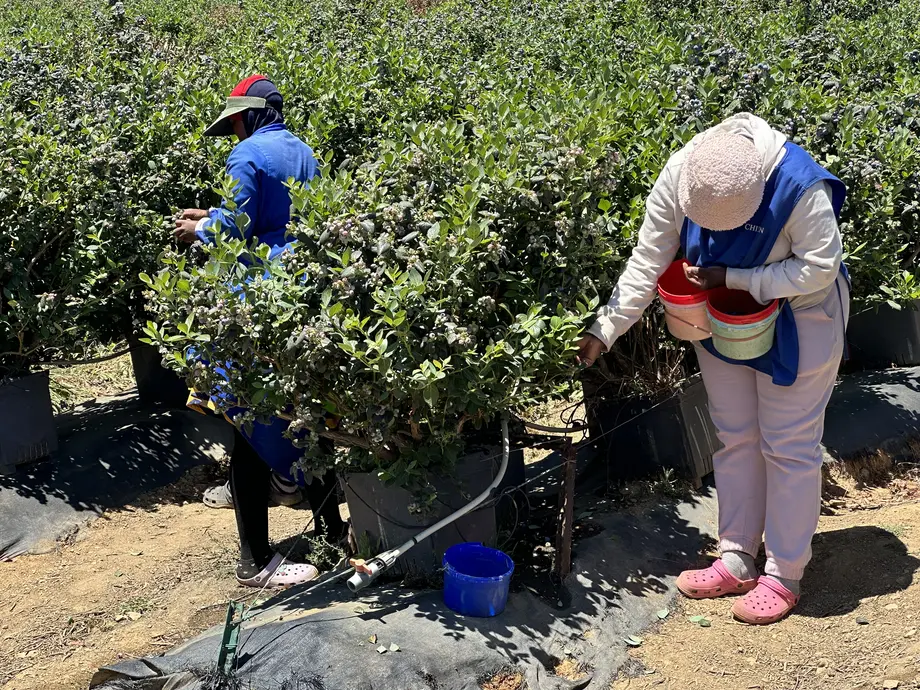
In 2024/25, frost particularly affected the northern growing regions. Despite these losses, national production increased by 10% compared with the previous season, supported by productivity gains and more favourable weather conditions in other areas, especially in the Western Cape.
A further production increase of 2% is forecast for 2025/26. In just over a decade, South Africa has therefore developed from a minor producer into a significant player in the international blueberry trade.
Edited by the Italian Berry editorial team
Translation of the article Südafrika baut seine Rolle auf dem globalen Blaubeermarkt aus, published by Fruchthandel on 17 August 2026.
Italian Berry - All rights reserved