





Pairwise introduces a primocane-fruiting variety roughly half the height of a conventional blackberry plant, suitable for higher-density planting and with a shorter production cycle. Claimed yields theoretically reach 91 tonnes per hectare per year, but these figures come from the company and require independent validation.
Rather than simply a larger, sweeter blackberry or one with a longer shelf life, this is a plant designed to take up less space, produce earlier and simplify crop management. This is the proposition behind Fontana™, a new primocane-fruiting variety introduced by Pairwise for the fresh market.
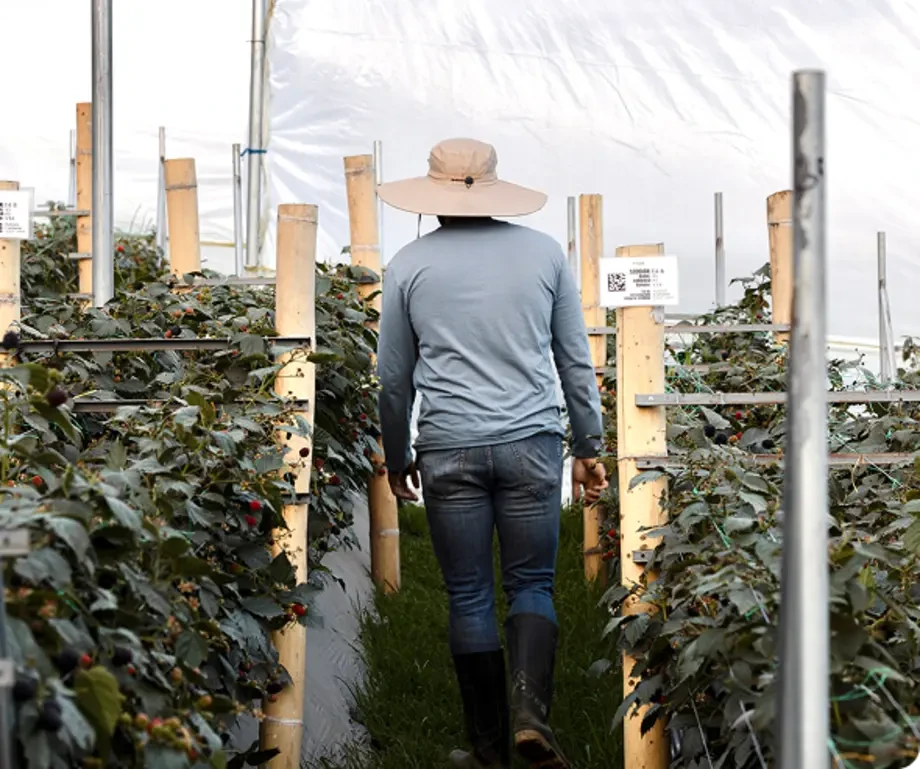
Its distinguishing feature is its compact architecture: the plant reportedly reaches a height of 1.1 to 1.5 metres, approximately half that of a conventional blackberry plant. According to Pairwise, this would allow growers to increase planting density, reduce the labour required for trellis management and make the fruit easier to access during harvesting.
Fontana was developed from a Plant Sciences Genetics (PSG) variety already valued for its flavour and fruit quality. Pairwise says its work focused primarily on plant structure while retaining the original blackberry's commercial characteristics.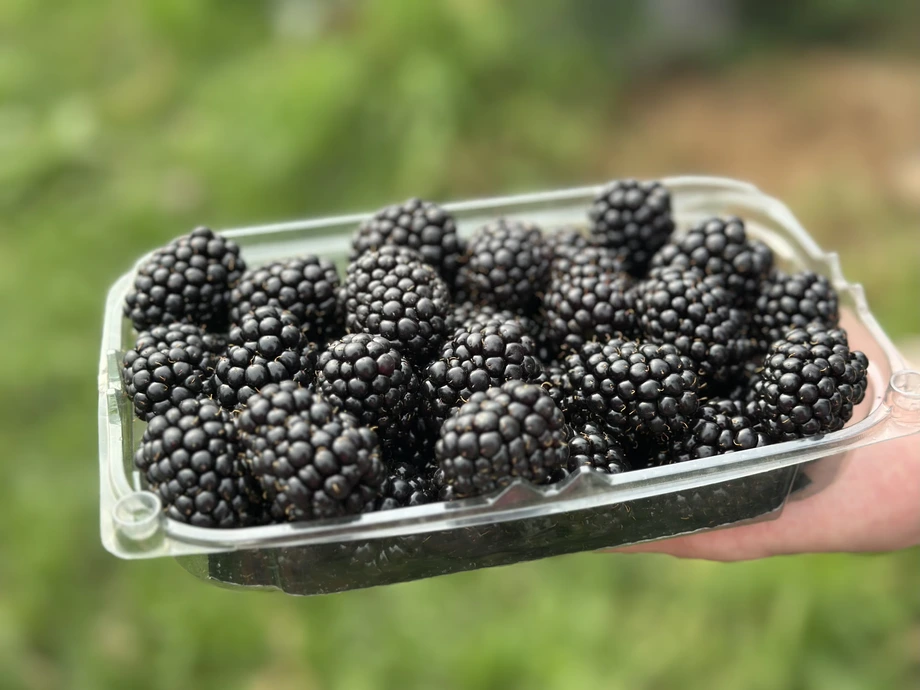
From fruit quality to plant efficiency
The most interesting aspect of the project is the shift in breeding objectives. Blackberry breeding has traditionally focused on thornlessness, sweetness, firmness, size and shelf life. Fontana instead places plant architecture at the centre of profitability.
A shorter, more compact plant could potentially offer several advantages:
more plants per hectare;
less vegetative growth to manage;
reduced or eliminated pruning during the production cycle;
less labour for trellising and staking;
more accessible fruit;
a shorter, more concentrated production schedule;
the possibility of completing multiple cycles in the same year.
Pairwise indicates that Fontana would require no intermediate pruning and only limited trellis management. These features could affect labour costs, which are particularly significant for a crop that remains heavily dependent on manual harvesting.
However, detailed data have not been published on labour hours per hectare, actual planting densities or harvesting costs per kilogram.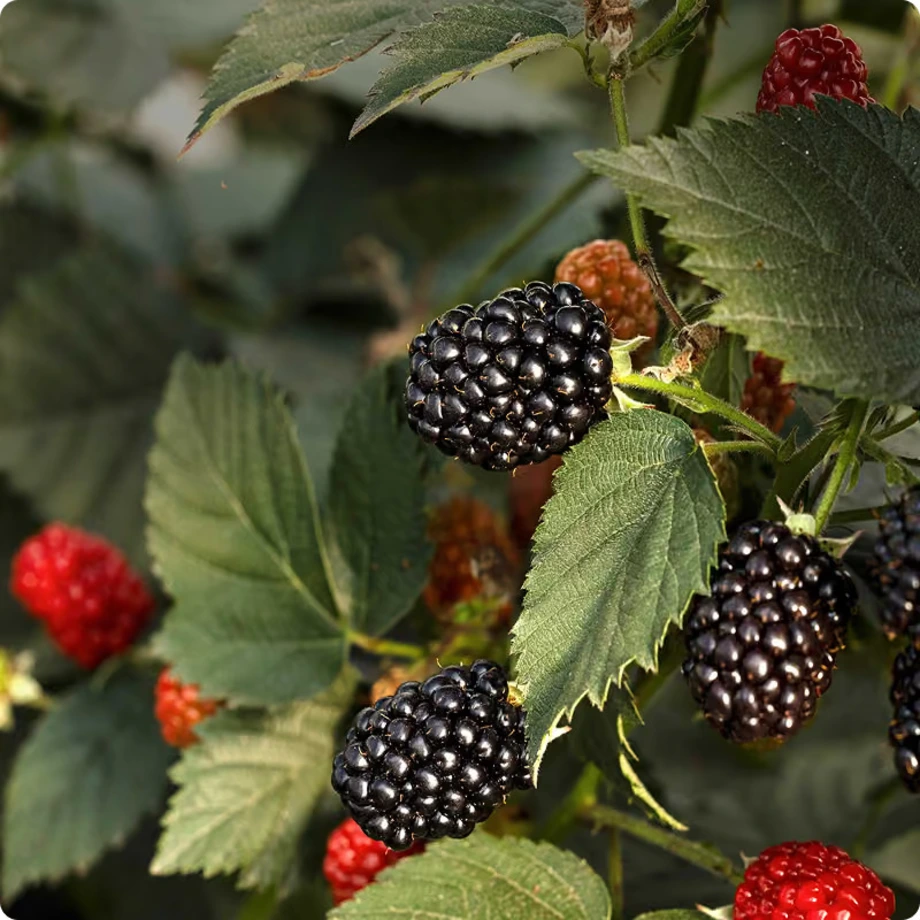
A cycle of 109 to 125 days
According to company data, Fontana would reach harvest in 109–125 days, compared with approximately 180 days cited by Pairwise as the benchmark for a conventional primocane-fruiting blackberry.
Earlier production, combined with a more concentrated cropping window, would allow 1.6 to 1.8 cycles per year, compared with 1–1.4 for the production system used as a benchmark.
This figure does not automatically mean that Fontana can deliver almost two complete cycles in every growing environment. Results will depend on temperature, light, growing practices, plant availability, primocane management and the actual length of the season in different production regions.
The reported performance figures refer to new production systems trialled in California and Latin America. Pairwise has not yet provided results broken down by location, planting date or growing conditions.
Theoretical yields exceed 90 tonnes per hectare
The most striking figures concern productivity.
Pairwise uses 2.04-kilogram cases as its unit of measurement. For Fontana, it reports:
7,500 to 10,500 cases per acre per cycle;
1.6 to 1.8 cycles per year;
up to 18,000 cases per acre per year.
Converted into metric units, the range per cycle corresponds to approximately 37.8–52.9 tonnes per hectare. The claimed annual maximum of 18,000 cases per acre would reach approximately 90.7 tonnes per hectare.
For the standard blackberry used as a benchmark, Pairwise reports an annual maximum of 8,400 cases per acre, equivalent to approximately 42.3 tonnes per hectare.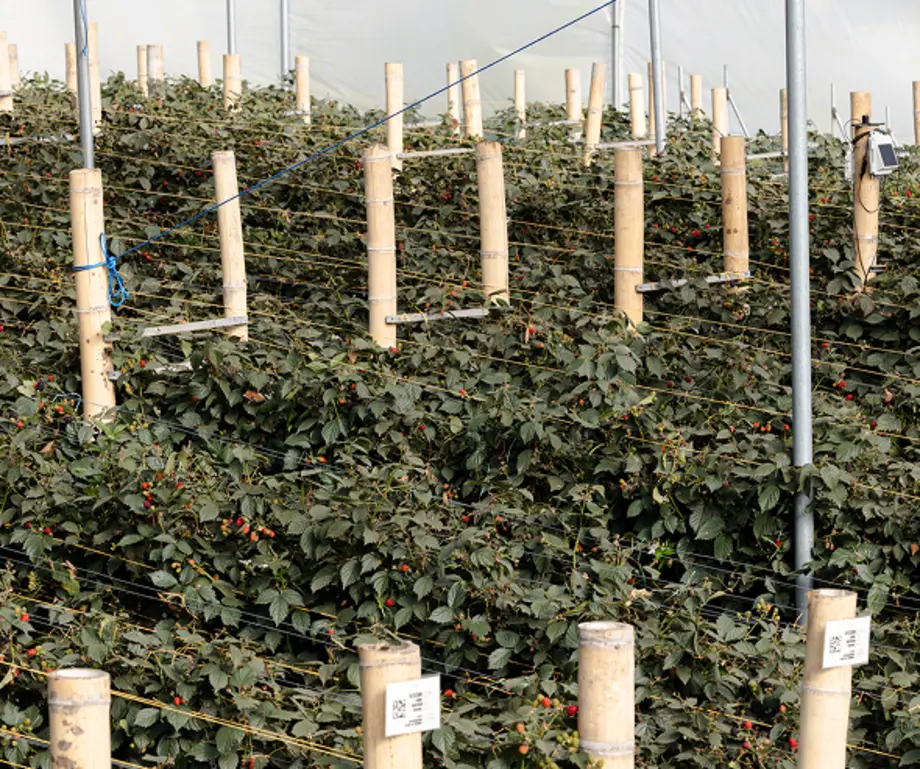
Fontana could therefore more than double annual production per unit of land. However, this is a company comparison rather than an average yield established through independent, multi-year trials. Assessing its economic viability will require at least four additional pieces of information:
number of plants per hectare;
net marketable yield, after rejects and off-size fruit;
harvesting hours required per kilogram;
yield stability in subsequent cycles.
A very high biological yield does not necessarily translate into marketable yield and may entail greater requirements for nutrition, irrigation, harvesting and cooling.
Larger fruit and less colour reversion
Fontana reportedly produces blackberries weighing 8 to 10 grams, compared with the 6–7.5 grams used as the benchmark for conventional fruit.
Pairwise also reports:
high firmness;
low colour reversion;
a Brix-to-acidity ratio of approximately 10:1 to 16:1;
shelf life comparable to that of conventional blackberries.
This last point is important. The company does not present Fontana as a variety with an exceptionally longer commercial life, but describes its shelf life as “in line” with standard fruit, for which it gives a range of three to twelve days.
The main commercial advantage should therefore come from the combination of greater firmness, low colour reversion, larger fruit size and greater production efficiency.
The Brix-to-acidity ratio alone does not demonstrate that the fruit is sweeter either. Assessing the sensory experience would require separate sugar and acidity values, alongside tasting panels evaluating fruit grown in different environments.
Is Fontana a CRISPR blackberry?
Pairwise is one of the companies most actively applying CRISPR technology to food crops. In 2024, it had already announced a seedless blackberry developed using its Fulcrum® platform, combining this trait with thornlessness and a compact growth habit.
In its announcement about Fontana, however, the company does not explicitly state that this particular variety was developed through gene editing. Fontana is described as being based on a PSG variety and developed with compact architecture, without specifying the method used to introduce the trait.
Based on the information currently available, it is therefore inaccurate to describe it as a “CRISPR blackberry”. Direct confirmation from Pairwise and any relevant regulatory information will be needed.
This distinction is particularly important in Europe, where the authorisation and commercialisation pathway would depend on the method actually used and the plant's regulatory classification.
The first of a new generation of blackberries
Fontana is only the first product in a broader programme. Pairwise is developing other blackberries with traits such as thornlessness and seedlessness, as well as first-year fruiting.
The strategy appears to be moving in two complementary directions. The first concerns consumers, with fruit that is easier to eat and potentially more consistent. The second directly concerns growers: smaller plants, higher density, earlier harvesting and fewer costly operations.
It is this latter component that makes Fontana particularly interesting. If the claimed results are confirmed at commercial scale, the variety could change not only the quantity produced per hectare, but also how blackberry plantings are designed.
Before assessing its potential for Europe and Mediterranean growing environments, however, more information will be needed on plant availability, licensing terms, suitability for protected and soilless cultivation, thermal requirements, responses to high temperatures and performance after storage and transport.
In any case, Fontana offers a significant change in perspective: to make blackberries more competitive, breeding does not necessarily have to focus solely on the fruit. It can begin by redesigning the plant that produces it.
Italian Berry - All rights reserved