








Christoph Stricker, Managing Director of Edeka and Everest Fresh, spoke at the IBO World Forum held on 7 October 2026 at Fruit Attraction (Madrid), analysing retail dynamics, consumers' perceived purchase risk and positioning strategies for the blueberry category.
A record-breaking category: from niche product to everyday consumption
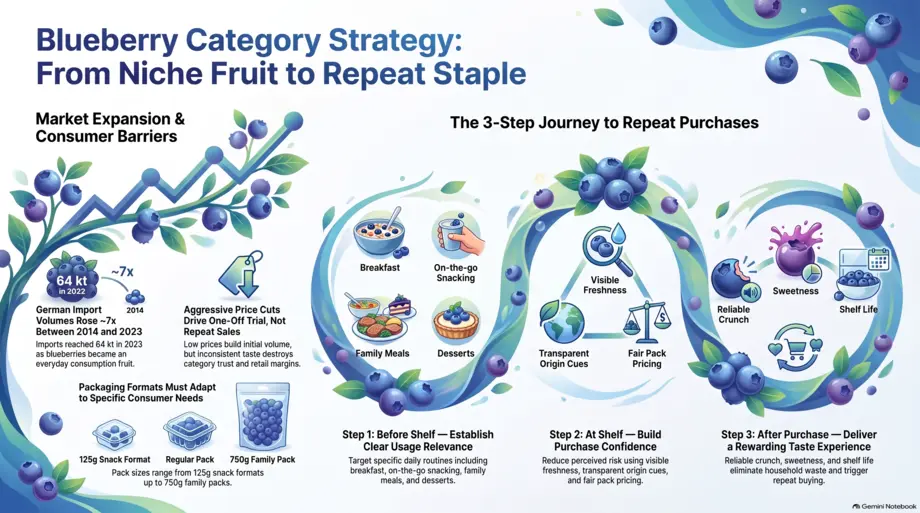
The German blueberry market has experienced unprecedented expansion over the past decade. German imports increased approximately sevenfold between 2014 and 2023, reaching 64,000 tonnes. Domestic production is also growing, with an estimated harvest of 17,300 tonnes for 2025. This rapid expansion in domestic production is supported by considerably shorter lead times to commercial production than those of traditional fruit crops such as apples.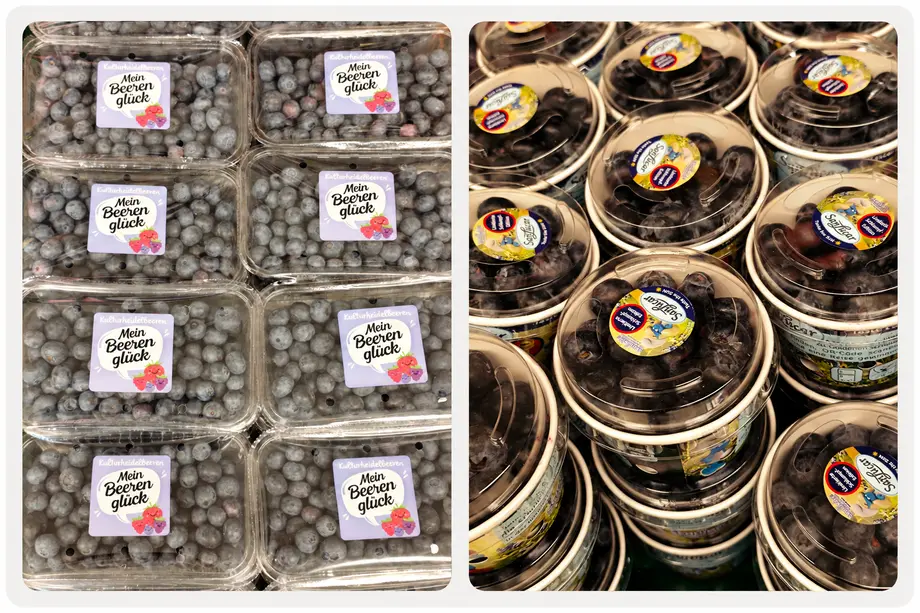
Today, year-round availability has become a fundamental requirement for consumers. However, this substantial increase in global supply has two direct consequences for grocery retailers:
- It intensifies price competition between retail chains.
- It significantly raises the bar for differentiation based on flavour and consistent quality.
Although domestic production inspires strong trust and a connection with local growing regions, it cannot meet annual demand on its own.
The real consumer equation: "You buy a promise, not a punnet"
The strategic challenge for retailers is not simply to sell more packs, but to understand how consumers turn interest in the category into consistent repeat purchases. At the shelf, consumers are primarily buying a promise whose value rests on four factors: health, sensory enjoyment, convenience and price transparency.
The strategic framework rests on three key pillars:
- Demand is structural: it is driven by recognised health benefits (high antioxidant content) and ease of use.
- Value is fragile: the interplay between pack size, entry price, origin and quality requires considerable care; aggressive price promotions risk destroying margins and trust in the category if fruit quality proves inconsistent.
- Execution determines repeat purchases: shelf availability provides access to the product, but customer loyalty depends on a perfect match between expectations and the actual eating experience.
The key insight: category growth depends on reducing perceived purchase risk. Consumers need a clear reason to buy today and confidence that flavour, freshness and value will also be delivered tomorrow.
The three purchase barriers and the triggers that overcome them
Consumers encounter economic, sensory and practical barriers during their decision-making process:
| Perceived barrier | Consumer question | DETERRENTS | Purchase trigger |
|---|---|---|---|
| Economic | "Is it worth it?" | High overall pack price, unclear value per kg, comparison with cheaper alternative fruits. | Visible value: clear pricing and transparent pack sizes. |
| Product risk | "Will it taste good?" | Variations in sweetness and texture, hidden defects or mould, perceived short shelf life. | Quality assurance: consistent flavour, crunch and freshness. |
| Usage friction | "Will we actually use it?" | Unsuitable pack size for the household, no immediate consumption occasion, concern about household food waste. | Fit with the occasion: pack sizes segmented by intended use. |
The evolution of packaging and new consumption occasions
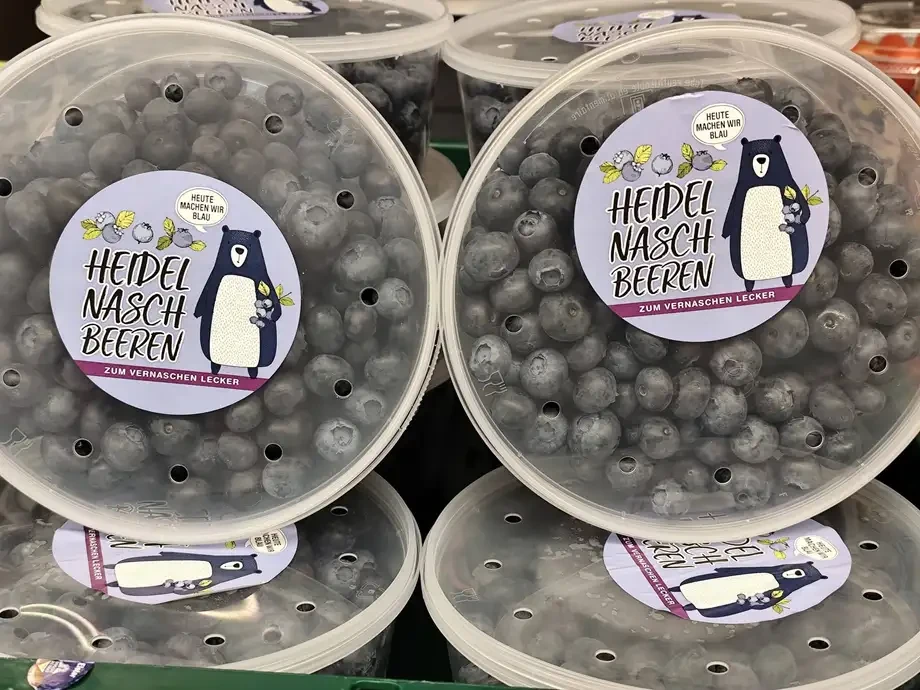
Packaging innovation is proving to be a key tool for increasing market penetration. In recent years, the sector has moved from the standard 125 g format to packs of 150 g, 500 g and up to 750 g (successfully offered even at €5.99), demonstrating that consumers are willing to buy larger packs for stocking up when the value per kg is clear and quality is assured.
Future category growth will come not from continuous price cuts, but from developing specific consumption occasions:
- Breakfast: pairing with yoghurt, cereals and bakery products.
- On-the-go / Snacking: convenient packs positioned near café-style products or lunchbox items.
- Family: larger packs offering a clear benefit in terms of price per kg.
- Enjoyment / Indulgence: use in desserts, home baking and special weekend occasions.
Shelf communication, berry sizes and variety management
One weakness identified in grocery retail is communication at the point of sale. Unlike in other categories, the average consumer does not know individual blueberry varieties and cannot distinguish between them. For shoppers, there is only the "blueberry", and their sole expectation is to find fruit with a pleasant, consistent flavour.
Consequently, retailers and the supply chain are responsible for selecting the right variety for each period of the year. Furthermore, size does not automatically guarantee quality: large berries (for example, 21 mm+) risk disappointing consumers if they fail to deliver the right texture, crunch and sugar content.
While growers are fundamental to the economic viability of the supply chain, it is the consumer's final experience at home that determines whether the product will be purchased again.
Three recommendations for the supply chain and retailers
In summary: An aggressive promotion can encourage initial trial; only an excellent eating experience can ensure repeat purchases over time.
The presentation concluded with three strategic priorities to ensure the sector's sustainable development:
- Relevance: use health credentials, convenience and multiple consumption occasions to maintain a broad customer base.
- Conversion: reassure shoppers about price, expected quality, pack size and reduced risk of waste when they make their choice at the shelf.
- Repeat purchases: consistently deliver sweetness, crunch, freshness and shelf life to turn occasional purchases into an established habit.
Photos: Edeka - Infographic: Italian Berry
Italian Berry - All rights reserved