







An enthusiastic review published in the United States shows how a sweeter, more aromatic and firmer blackberry can change consumers’ perceptions. The Sweet Karoline case suggests that a product often bought only occasionally can become a distinctive, repeatable taste experience.
For many consumers, buying fresh fruit is still a gamble. It may look appealing, but only after tasting it can you tell whether it really lives up to its promise. With blackberries, that uncertainty can be even more pronounced: fruit that looks perfect can turn out to be sour, lacking in aroma or quick to lose its firmness.
It is precisely this unpredictability that makes the case described by Patty Lee on Simply Recipes so interesting. After buying a pack of Sweet Karoline blackberries from Costco, the journalist says her expectations of what supermarket blackberries can offer have completely changed.
The language used in the article describes a genuine sensory discovery, turning a category she had previously bought without any particular preference into a product she now seeks out by name.
When a blackberry becomes a deliberate choice
Before trying Sweet Karoline, the author bought whichever berries were on promotion or looked best while shopping. After tasting them, she says she finally has a favourite blackberry, much as someone might have a regular brand of salsa or another packaged product.
This shift is particularly relevant for the supply chain. It shows that, even in fresh fruit, a variety or brand can become a recognisable guarantee, reducing the uncertainty that usually comes with a purchase.
Perceived quality does not come from a single attribute. Patty Lee describes blackberries that are noticeably sweeter than conventional ones, with a light floral aroma and a taste almost like candy. Juiciness, firmness and consistency from one pack to another add to the experience.
The product’s value, therefore, lies not only in a high Brix level, but in the combination of sweetness, aroma, texture and a reliable eating experience.
Seven years to develop an eating experience
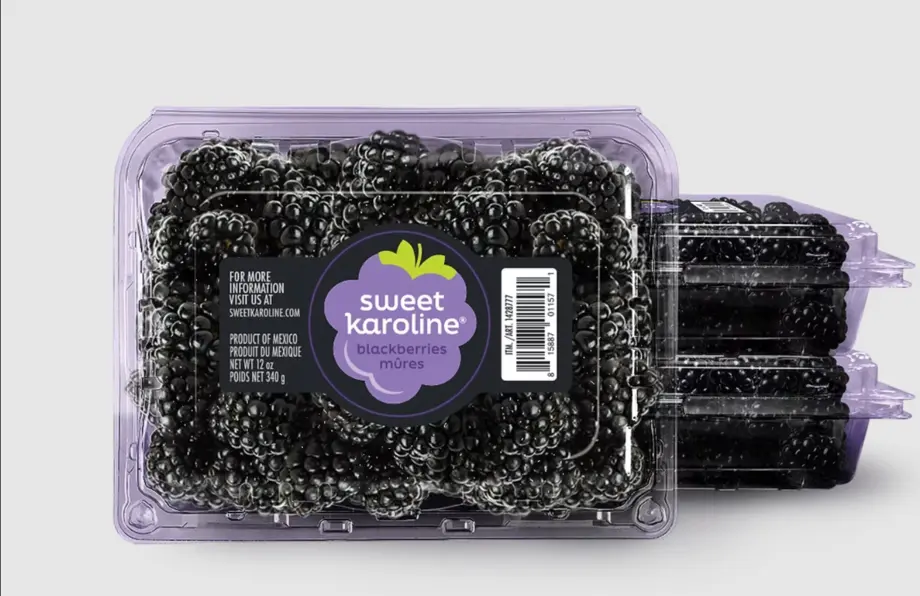
Sweet Karoline is the result of the Expoberries breeding programme, owned by Alpine Fresh and Berry Fresh. Its development took around seven years of natural crosses, evaluations and commercial trials.
The first variety introduced under the brand, identified as EXPB3181, was selected for taste, sweetness, firmness, shelf life, appearance and the overall eating experience.
According to information provided by the company to Chron, the variety also offers 20% longer shelf life than the conventional blackberries used for comparison, along with greater resistance to red drupelets.
The fruit is slightly smaller than many standard blackberries, but has a dark colour, firm texture and distinctive flavour profile. The project shows that size does not necessarily have to be the primary criterion for commercial selection: a smaller fruit can deliver greater satisfaction if it offers intense flavour and consistent quality.
Launched commercially in 2020, Sweet Karoline is now distributed through numerous North American retailers. The brand’s official website lists Costco, H-E-B, Publix, Walmart, Whole Foods, Lidl and Safeway among its retailers.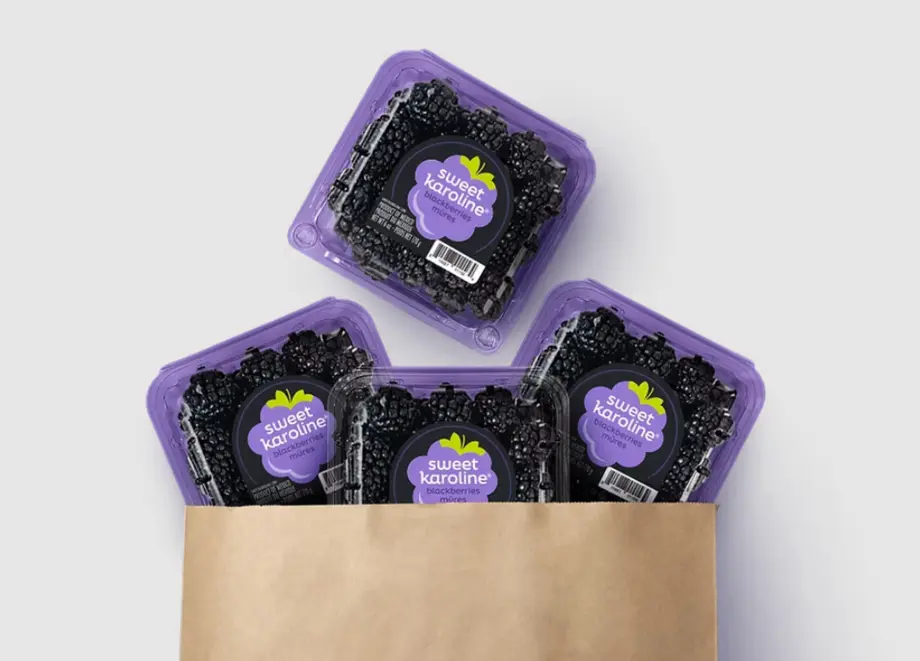
Consistency can matter as much as sweetness
One of the most important points in the review is the repeatability of the experience. The author says that every pack she bought contained sweet, juicy blackberries. She also notes that they kept well at home, without the frequent problem of fruit turning soft or mouldy before it could be eaten.
Consistent quality builds trust, encourages repeat purchases and helps create a reputation around a recognisable name. The same principle is already evident in other categories, from apples to table grapes, where certain varieties or brands have become a clear promise of crunch, sweetness and flavour.
For blackberries, which are still often presented on the shelf as a generic product, this approach could create new commercial opportunities.
From commodity to a product with an identity
The Sweet Karoline case suggests that category growth may depend on the ability to build a sensory identity.
Blackberries have characteristics that make them particularly well suited to this evolution. Their intense colour and structure of numerous drupelets give them a strong visual presence. Their flavour can develop sweet, tart, floral and wine-like notes, creating a more complex experience than that of many other fruits.
However, this potential richness can become a drawback when the fruit is too acidic or under-ripe, loses firmness or varies widely from one berry to another within the same pack. Breeding can address these issues by selecting varieties that combine eating quality with the requirements of modern retail, striking a balance that makes blackberries enjoyable, distinctive and immediately recognisable without erasing their identity.
An opportunity for the European market, too
The North American experience offers interesting insights for the European supply chain as well. Compared with blueberries and raspberries, blackberries still have considerable room to strengthen their positioning and become a more frequent purchase.
For that to happen, several factors will need to be addressed at the same time: flavour-led genetics, harvesting at the right stage of maturity, careful cold-chain management, firmness, shelf life and consumer communication.
Retail can also play a decisive role. Presenting all blackberries as essentially equivalent makes it difficult to highlight differences in quality. Identifying varieties, breeding programmes or premium lines can explain why a product offers a different experience and, when appropriate, justify a higher price.
Tastings, sensory descriptions, recipes and serving suggestions can also help the category move beyond predominantly occasional consumption. Blackberries can be eaten as a snack, added to yoghurt and breakfast dishes, or used in baking, drinks and savoury preparations: their versatility creates more occasions to buy them.
The decisive promise: good today and tomorrow
The most significant aspect of the Simply Recipes review is not the enthusiasm for a single pack, but the new expectation it creates. After tasting a blackberry that is sweet, aromatic, firm and reliable, consumers no longer see mediocre quality as inevitable in the category.
This is where blackberries’ real potential lies. Better genetics can turn the fruit from a minor presence in the berries assortment into a desirable, recognisable product that inspires loyalty.
Italian Berry – All rights reserved