








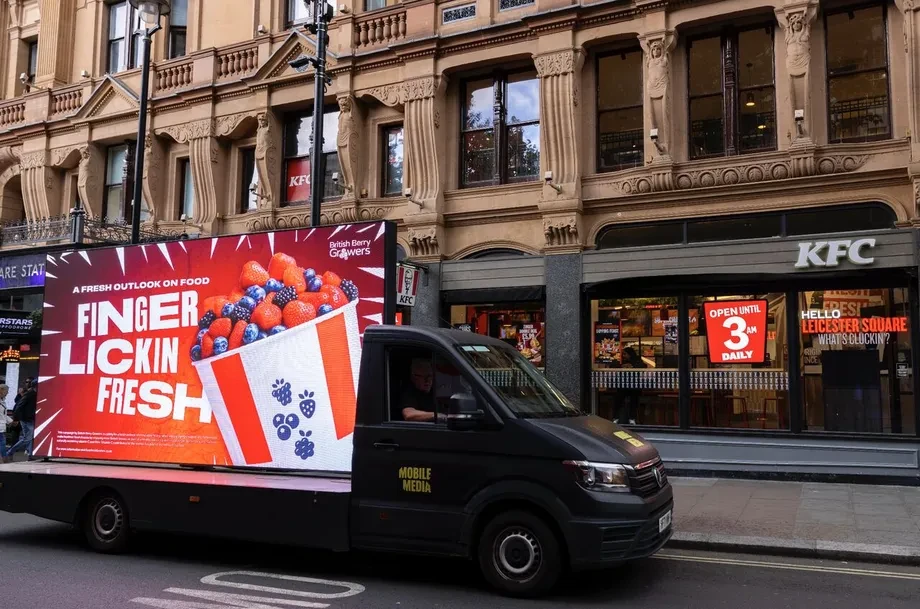
As children return to the classroom, British Berry Growers is drawing attention once again to the imbalance in food advertising aimed at children: while brands selling products high in fat, salt and sugar spend millions to reach families, strawberries, raspberries and blackberries remain almost invisible.
What foods did British children see advertised during the summer holidays? Probably not strawberries, raspberries or blackberries. This is the provocative question raised by British Berry Growers to mark the back-to-school period and renew the debate about the disparity between the promotion of foods high in fat, salt or sugar (HFSS) and that of fresh produce.
Just as millions of parents resume preparing snacks and lunchboxes, the British association points out that fruit and vegetables continue to account for only a marginal share of food advertising expenditure, despite being central to all public health recommendations concerning children’s diets.
The back-to-school period therefore provides an opportunity to call on the UK government to focus not only on the content that should be restricted, but also on the positive food choices that deserve greater visibility.
A summer dominated by HFSS brands
According to British Berry Growers, during the summer holidays children were reached primarily by campaigns from major HFSS brands, backed by budgets that the fresh produce sector can hardly match.
The issue is not simply the amount invested. Repeated exposure to advertising messages helps build brand familiarity, influence preferences and make certain products more desirable. This influence is particularly significant during childhood, when eating habits are formed that often continue into later life.
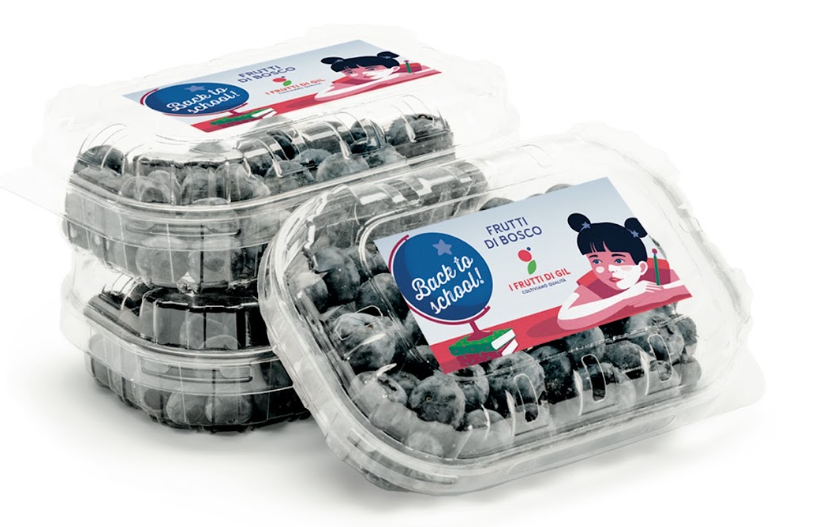
In Italy, "I Frutti di Gil" has just launched a "Back To School" campaign featuring a dedicated recipe booklet and limited-edition packaging designed by Cesena-based illustrator Alessandra "Allisand" Bruni.
For berry growers, the result is a highly unbalanced communications market: on one side are companies able to invest millions to reach younger consumers; on the other are fresh products that, despite being recommended as part of a balanced diet, struggle to gain visibility and attention.
The relaunch of “Fresh Outlook on Food”
The message issued to coincide with the reopening of schools builds on the work launched in June 2026 with “Fresh Outlook on Food”, the campaign through which British Berry Growers brought berries into outdoor advertising spaces traditionally occupied by fast-food brands.
The advertisements, designed as parodies of campaigns promoting burgers, chips and fried chicken, replaced these products with strawberries, raspberries, blackberries and other berries. Bus shelters, billboards and digital screens thus became the setting for a deliberately unusual fresh produce campaign.
The initiative also sought to highlight a gap in UK regulations. Restrictions on the promotion of HFSS products apply to television advertising before 9 pm and to paid online advertising, but are not applied in the same way to outdoor spaces frequented by children every day.
 The "Back to School" campaign by the Italian brand "I Frutti di Gil"
Nine out of ten parents report exposure
Research commissioned by British Berry Growers and released when the campaign was launched found that nine out of ten parents believed their children were exposed to junk food advertising on their way to school.
Three out of five parents said they were concerned about this exposure, while around two-thirds believed that these messages could undermine the healthy eating habits encouraged at home.
Advertising pressure also appears to be unevenly distributed. A report by Bite Back highlighted a higher concentration of fast-food advertising campaigns in economically disadvantaged areas, contributing to wider inequalities in access to healthier eating patterns.
From lunchboxes to advertising policies
With the start of the new school year, British Berry Growers is therefore calling for fresh produce to be recognised more explicitly in food advertising policies and for growers to be given a genuine opportunity to communicate with families.
The issue is not simply about banning or restricting the promotion of less healthy foods. It is also about creating the conditions for fruit and vegetables to compete for visibility, using messages and channels capable of reaching children and parents.
For the berry industry, the back-to-school period represents a particularly important opportunity. Strawberries, blueberries, raspberries and blackberries are suitable for consumption away from home, easy to portion and aligned with growing interest in convenient snacks with a positive nutritional profile.
These characteristics alone, however, are not enough to make berries a central part of everyday food choices. If the UK government genuinely intends to improve children’s diets, the association argues, it must also address the economic and communications imbalance that currently determines which foods enter children’s imagination before they even enter their lunchboxes.
Italian Berry - All rights reserved