




Spain accounts for 23% of global strawberry exports, while Andalusia shipped 216,771 tonnes during the 2025/26 season. In the first eight months of 2026, however, purchases by Spanish households fell to 101,000 tonnes.
Spain remains the world’s leading strawberry exporter, but the domestic market is moving in the opposite direction. Between January and August 2026, Spanish households purchased 101,000 tonnes of strawberries, 9% less than in the same period of 2025.
The contraction was considerably greater than that recorded for fresh fruit as a whole, whose consumption fell by 3.1%. According to Fepex, strawberry volumes therefore declined at almost three times the category average.
The figure is particularly significant because it comes as the Spanish industry consolidates its central role in international trade. According to the Price and Market Observatory of the Junta de Andalucía, Spain accounted for 23% of global strawberry exports in 2025, ahead of Mexico at 16.8% and the United States at 16.4%.
Production and exports: an important distinction
The Andalusian report estimates 2026 production at 327,255 tonnes of strawberries, 3.1% more than the 317,505 tonnes recorded in 2025.
This volume has been described in some media reports as the quantity exported, but it actually represents Andalusian production. The distinction is important: almost 96% of Spanish strawberries are produced in Andalusia, with virtually all of the region’s output concentrated in the province of Huelva.
During the commercial season between December 2025 and June 2026, Andalusia exported 216,771 tonnes, 3.2% more than in the previous season. Their value increased by 1.7%, reaching €677 million.
Because value grew more slowly than volume, the implied average export return decreased slightly, from approximately €3.17 to €3.12/kg. This is an average calculation that does not account for differences in variety, period, size, packaging or destination market.
Germany is the leading market, with Italy in fourth place
Germany absorbed 29.8% of the volume exported by Andalusia during the season, followed by:
- France: 15.8%;
- United Kingdom: 12%;
- Italy: 8.7%;
- Portugal: 7.4%;
- Netherlands: 6.5%;
- Poland: 4%.
Spain is also the European Union’s leading strawberry supplier, accounting for 47.6% of volume and 43.4% of the value of EU strawberry imports.
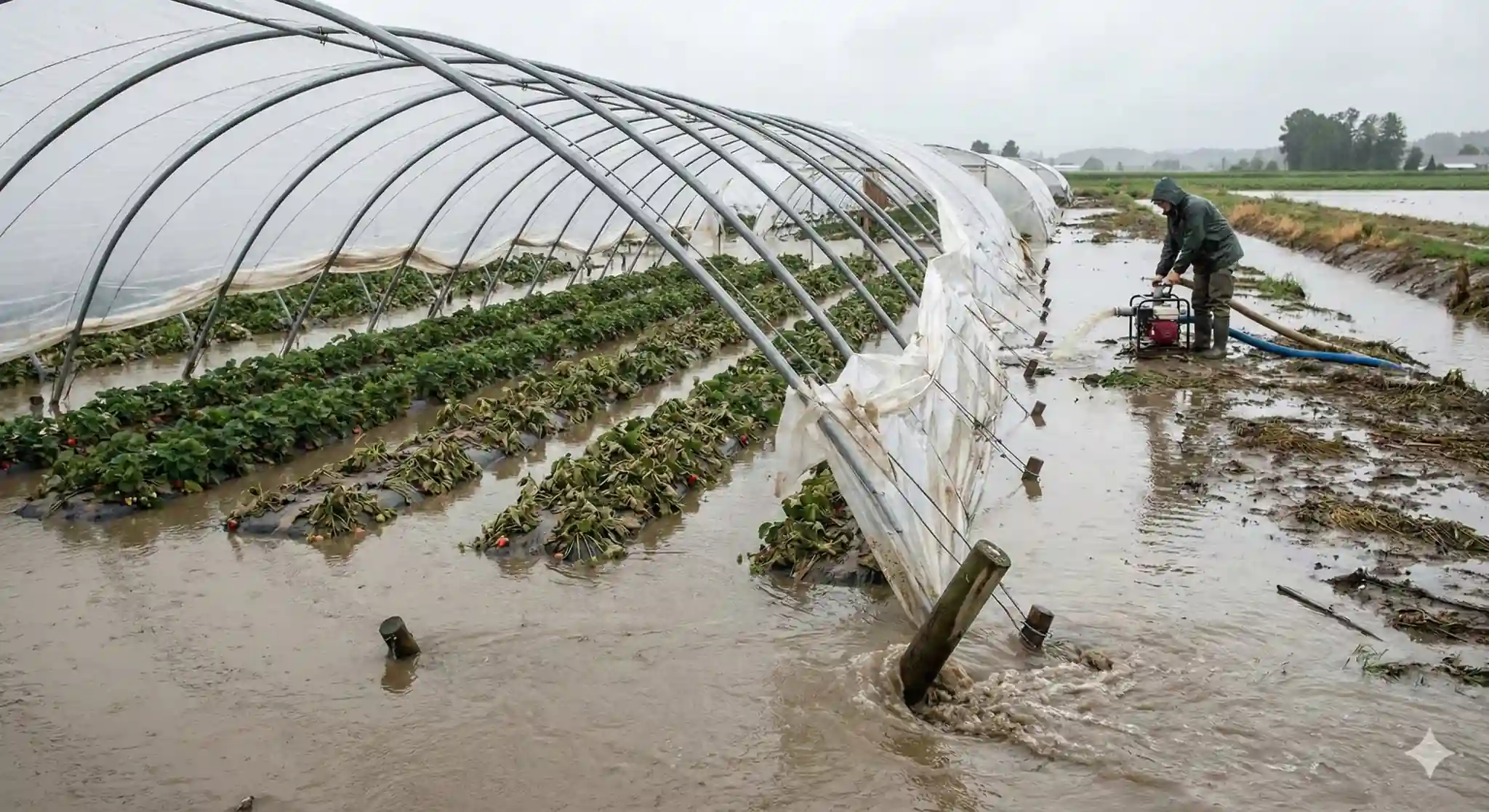
The calendar remains highly concentrated. In 2025/26, Andalusian exports peaked in April at 79,558 tonnes, after rainfall in March had delayed part of the crop. A further 47,587 tonnes were exported in May, but rising temperatures in Huelva and the overlap with Central European seasons subsequently accelerated the end of the campaign.
Consumption interrupts the recovery seen in 2024 and 2025
The decline in 2026 follows two years of recovery. Spanish per-capita consumption had fallen from 2.59kg in 2021 to 2.20kg in 2023, before rising to 2.33kg in 2024 and 2.45kg in 2025. Over the whole of 2025, households purchased 114,734 tonnes of strawberries.
The available data do not yet explain why demand fell by 9% during the first eight months of 2026. In the update published by FEPEX, the Food Consumption Panel does not provide the strawberry-specific average retail price or break purchases down by pack format, retailer or origin.
The decline therefore cannot automatically be attributed to higher prices. Possible contributing factors include the later production calendar, weather conditions, less consistent promotional activity, the quality available during certain weeks or competition from other fruits.
The wider context is nevertheless weak: between January and August, Spanish household consumption of fresh fruit and vegetables fell by 2.7%, while expenditure declined by 1%. Purchases of oranges, mandarins and apples decreased by 8%, 7% and 7% respectively, while grapes, cherries and apricots recorded growth.
A strong industry abroad, but more vulnerable at home
The industry remains highly competitive in international markets, but it is not immune to weakening domestic consumption.
Exports allow Huelva to market high volumes during a strategic period for European retailers. However, dependence on foreign markets exposes the industry to logistics costs, competition from Central European production and the commercial decisions of a limited number of major destination countries.
The decline in Spanish demand also suggests that increasing production cannot be supported solely by greater export capacity. Action is also needed on purchasing frequency, consistent quality, pack formats, communication and consumption occasions.
Italian Berry – All rights reserved