









Decree-Law No. 143/2026 confirms the requirement for certain single-use packaging, including packaging for fresh fruit and vegetables weighing less than 1.5 kg. However, penalties will apply only from 1 January 2030.
The requirement under the PPWR has entered into force, but for almost three and a half years the specific penalties for non-compliance will not apply. This is the most significant aspect of Decree-Law No. 143 of 7 August 2026, published in Official Gazette No. 182 and effective from 8 August.
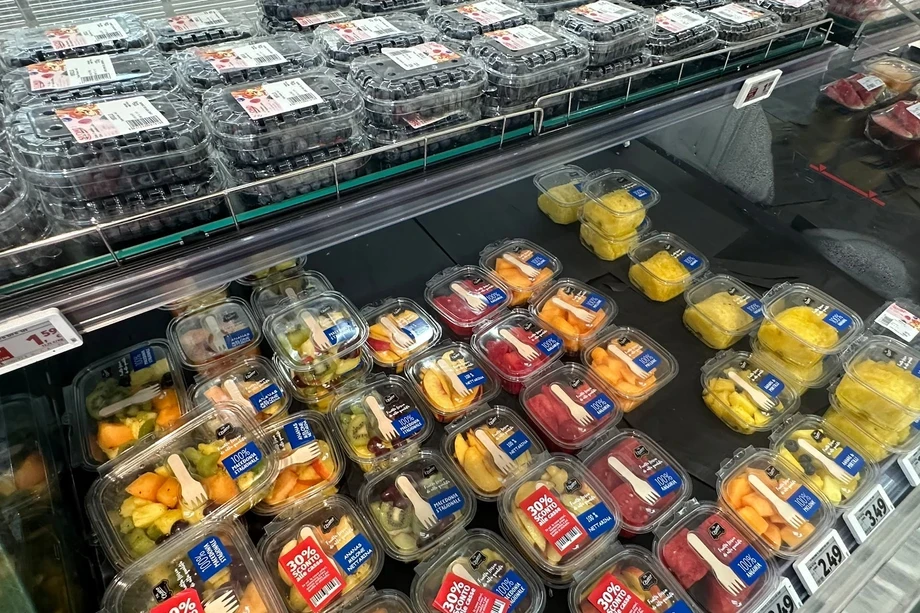
The measure introduces into the Italian Environmental Code a requirement to use certified biodegradable and compostable packaging for certain categories of single-use plastic packaging. These include packaging used for less than 1.5 kg of pre-packed fresh fruit and vegetables, a category covering most formats used in the berries market.
However, the penalty regime associated with the new requirement will apply only from 1 January 2030.
A mandatory rule, but no specific penalties until 2030
The decree establishes two separate dates:
- 8 August 2026: entry into force of the certified compostability requirement;
- 1 January 2030: application of the administrative penalties.
The requirement has therefore not been postponed until 2030. Since August 2026, the packaging concerned, when first made available on the Italian market, must be certified as biodegradable and compostable in accordance with UNI EN 13432 or equivalent standards recognised at European level.
However, for breaches of this specific requirement, the decree provides for a period of more than three years during which the new fines will not yet apply.
This creates an unusual transitional phase: the legal requirement is already in force, but the associated penalty regime will become effective only in 2030.
Fines ranging from €2,500 to €25,000
From 1 January 2030, anyone placing non-compliant packaging on the market may be subject to an administrative fine ranging from €2,500 to €25,000.
The fine may be increased to up to four times the maximum amount when the breach concerns packaging whose value exceeds 10% of the offender’s turnover. In the most economically significant cases, the penalty may therefore reach €100,000.
The postponement applies only to this specific penalty. It should not be interpreted as a general deferral of the requirement or as explicit authorisation to continue using non-compliant packaging until 2029.
Other provisions relating to safety, food-contact materials, correct information and the general compliance of packaging also remain applicable.
Which fruit and vegetable packaging is covered?
As previously reported by Italian Berry, the provision concerns single-use plastic packaging for less than 1.5 kg of pre-packed fresh fruit and vegetables.
Depending on the material and technical characteristics, the following packaging may therefore be covered in the berries sector:
- single-use trays and punnets;
- packaging with an integrated lid;
- plastic nets and wrappers;
- other containers intended for the sale of pre-packed produce.
The formats concerned include those commonly used for blueberries, raspberries, strawberries, blackberries and currants, ranging from 125-gram punnets to family-sized packs of 500 grams, 750 grams or one kilogram.
The rule does not apply generally to all bags found in supermarket fruit and vegetable departments. It specifically refers to single-use plastic packaging containing pre-packed fresh produce. Packaging made from materials other than plastic does not automatically fall within the scope of this particular requirement.
A transitional period requiring clarification
The postponement of penalties until 2030 should allow the supply chain to adapt its materials, supplies and packaging lines gradually. However, the decree does not specify in detail how non-compliant packaging already purchased or held in stock should be managed during this period.
Several operational questions therefore remain unresolved for growers, packers and distributors:
- whether stocks acquired before 8 August may continue to be used;
- the documentation required from suppliers;
- identification of the party responsible for first placing the packaging on the market;
- the controls applicable during the period before 2030;
- coordination with the other provisions of the EU Packaging and Packaging Waste Regulation.
The postponement of the fines does not remove the need for businesses to assess their position and verify the compliance of the packaging they use immediately.
The supply chain has time to adapt, but the requirement is already in force
For the berries sector, the period from August 2026 to December 2029 represents a substantial adjustment window, even though it is not formally defined as a moratorium.
Replacing packaging may require technical and commercial trials. Compostable materials will need to provide adequate ventilation, strength, product visibility, storage performance and shelf life without compromising the quality of particularly delicate fruit.
Businesses should therefore use the period before the penalties take effect to:
- map all single-use plastic packaging weighing less than 1.5 kg;
- verify UNI EN 13432 certifications;
- request complete documentation from suppliers;
- conduct packaging, transport and storage trials;
- plan the gradual use of existing stocks;
- update packaging procurement contracts.
The decree must be converted into law
Decree-Law No. 143/2026 must be converted into law by Parliament within 60 days of its publication. During the parliamentary process, clarifications may be introduced regarding existing stocks, controls, operator responsibilities and the period preceding the application of the penalties.
Nevertheless, the text currently in force establishes one clear point: the compostability requirement has applied since 8 August 2026, while the associated penalties will take effect only from 1 January 2030.
Read the Decree-Law in the Italian Official Gazette