





Blueberry packers are under pressure from two sides. Retail buyers expect every punnet to be uniform and firm, while seasonal labour for manual inspection is harder to find each year. Optical sorters are an answer to both problems, but they differ in how well they see the fruit, how they treat it and how much work they require. So how does the MXM BN.2 compare?
High capacity in a small footprint
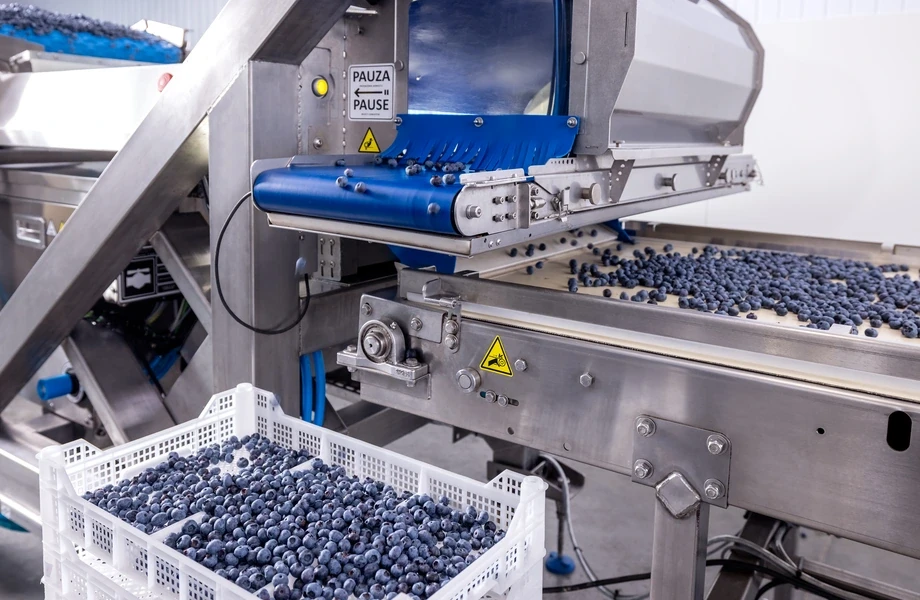
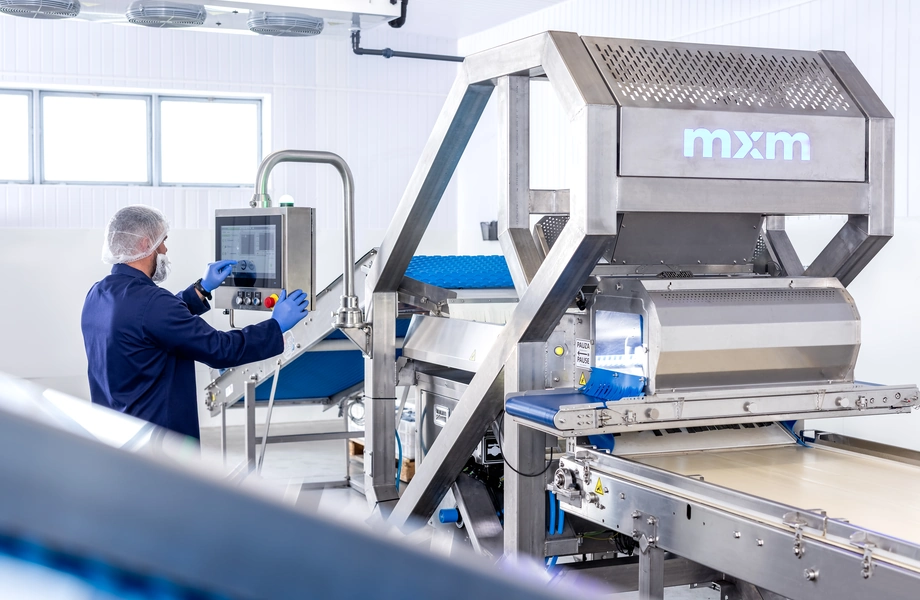
The machine was designed and manufactured in Poland by Milbor PMC. With a capacity of up to 3 t/h, it takes up only 3 m2. The MXM BN.2 optical blueberry sorter works as a pass/reject sorter, not a grader: good fruit goes on, rejected fruit leaves on a single reject conveyor. Its compact design means it can be installed in an existing packhouse, adding sorting capacity without expanding the building.
Two cameras, both sides of the berry
A single soft or unripe berry is often enough for a buyer to downgrade a batch. Yet many packhouses still sort for size, colour and softness on separate machines or at manual inspection tables, and sorters with one camera only see the upper side of the fruit. The MXM BN.2 assesses size, softness and degree of ripeness in a single pass.
Two 2K line-scan cameras, working in RGB and near-infrared (NIR), scan the top and bottom of every berry at the same time. The fruit is not rotated in the process, which helps preserve its natural bloom. NIR imaging is what allows the machine to pick out berries that are starting to soften before the change is clearly visible on the surface.
For the packhouse, this means one machine instead of a chain of sorting steps, fewer people at the inspection table and a more consistent result from batch to batch.
Handling the fruit as little as possible
The value of a blueberry is decided after it leaves the field. The studies show that most impact damage happens at drops and transfer points, and that bruised berries soften faster in cold storage. The MXM BN.2 was designed with this in mind.
The total drop is under 16 cm, and the fruit lands on silicone padding ramps instead of bare steel. In Milbor PMC’s own measurements with an instrumented impact sensor, the average impact in the MXM was 43.9 G, compared to 81.4 G in a conventional sorter and 112.1 G in a grader.
The berries were also hit less often: on average 4 impacts per run in the MXM BN.2, compared with 10.2 and 13.0. Together, these findings translate into better-preserved fruit and fewer customer complaints.
Keeping the season running
At peak season, every hour spent cleaning or waiting for a service engineer is an hour without making money. Cleaning a conventional grader can take a full shift. The MXM BN.2 is cleaned daily in around 20 minutes.
The machine can be connected to the internet, which lets Milbor PMC’s service team diagnose most issues remotely, without a site visit. In practice, this means more hours of sorting per day and fewer people tied up with maintenance during the busiest weeks.
Test the sorter before you buy
As the blueberry sorting market becomes more competitive, growers and packers gain more choice in matching equipment to the scale of their business. Those who want to see how the MXM BN.2 handles their own fruit can arrange a demonstration or ask about seasonal rental on the manufacturer’s website.
Produced in collaboration with Milbor
Italian Berry - All rights reserved