




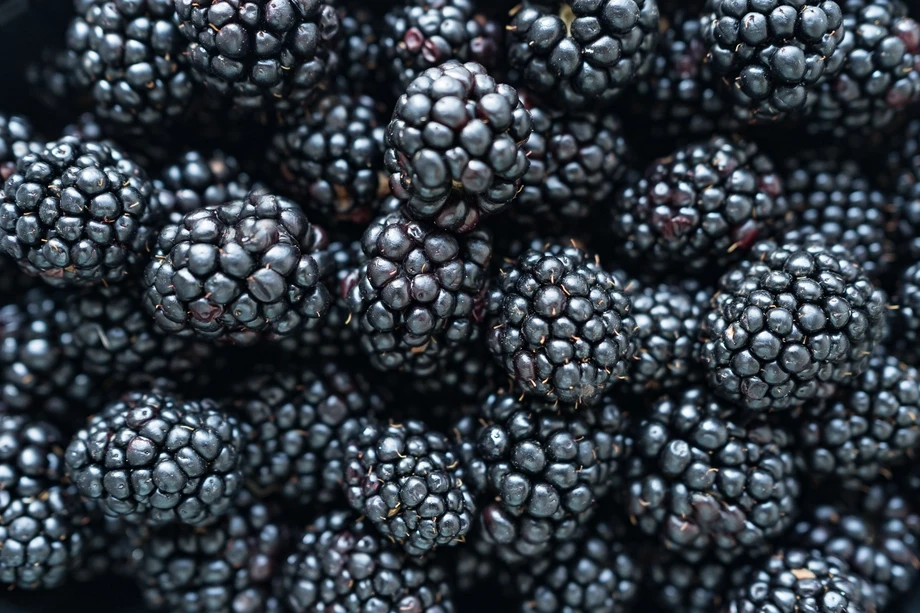
Three federal lawsuits in the United States have brought ownership of plant varieties and the line between commercial competition and the unauthorised use of plant material into sharp focus. On 19 November, Driscoll’s sued Expoberries, Alpine Fresh and Berry Fresh over the commercialisation of the Sweet Karoline blackberry and the Daniela raspberry. The allegations have not yet been examined on their merits by the courts.
The lawsuits were filed in three districts: the Eastern District of Virginia, the District of Delaware and the Southern District of Texas. In the Virginia case, former breeder Jose Maurilio Rodriguez Mesa is also named as a defendant alongside Expoberries.
The Delaware and Texas filings concern Alpine Fresh and Berry Fresh, respectively. The cases are separate and, based on the court records publicly available to date, no ruling on the merits has been issued.
The allegations and the former employee’s role
According to Driscoll’s, the two varieties were derived from proprietary plant material allegedly taken by a former employee of the company’s breeding programme in Mexico. The company claims that the former employee subsequently developed and patented the varieties, naming himself as their sole inventor.
Driscoll’s also alleges that the fruit was propagated and commercialised without authorisation. This is the company’s account as set out in the lawsuits, not a finding of fact by the court.
The dispute involves U.S. plant patents: patent PP32,907 describes the EXPB3181 blackberry, while patent PP32,948 covers the EXPR02 raspberry.
Both list Rodriguez Mesa as the inventor and Expoberries as the patent owner. Among other things, Driscoll’s is seeking recognition of its rights to the varieties and patents, as well as correction of the inventorship attribution.
The questions surrounding genetic evidence and chronology
With regard to Sweet Karoline, Driscoll’s says independent DNA testing allegedly found a close genetic relationship to varieties present in its trial fields while Rodriguez Mesa was working for the company.
The company also disputes whether the parent variety identified in the EXPB3181 patent is in fact a parent of the variety. Information released so far links these allegations mainly to the blackberry; they should not automatically be extended to the Daniela raspberry.
The timeline is also disputed. The EXPB3181 patent describes a cross made in Mexico in 2013, with the seeds germinating that same year and a plant selected after fruiting in 2014.
Driscoll’s argues that this sequence is inconsistent with the suggestion that the variety was developed after Rodriguez Mesa left the company in June 2013. The court proceedings will determine how these dates and the genetic evidence are assessed.
Two years of unsuccessful efforts
In the United States, a plant patent gives its owner the right to exclude others from asexually reproducing the plant and from selling, using or importing the plant so reproduced, or any of its parts.
This provision appears in Section 163 of Title 35 of the U.S. Code. The law therefore protects rights that may affect the availability of nursery plants and the trade in fruit, although how those rights apply depends on the facts and claims in each case.
The issue matters to breeders, nurseries, growers and commercial operators. Varietal development programmes require years of selection, testing and investment, while propagation and distribution often involve multiple parties and countries.
In 2020, Alpine Fresh and Berry Fresh presented Sweet Karoline as the first blackberry from Expoberries’ breeding and growing programme, which they then described as being owned and operated by them. That earlier commercial positioning helps explain why the lawsuits involve several players across the supply chain, without implying any conclusion about the liability of the individual companies.
Driscoll’s CEO, Brie Smith, said the company had spent about two years trying to reach a private resolution. She said the dispute concerns those who, in the company’s view, took the genetics—not growers who may have planted the varieties in good faith.
Driscoll’s said it remains open to a resolution that gives those growers a way forward. Meanwhile, the varieties’ commercial future remains uncertain until the dispute is resolved.
At this early stage, the proceedings do not yet show whether Driscoll’s claims will succeed or what impact the dispute may have on licences, production or the availability of Sweet Karoline and Daniela.
The cases will put breeding records, ownership of plant material and the evidentiary value of genetic testing to the test in the protection of intellectual property in agriculture.
Italian Berry - All rights reserved